
The short answer
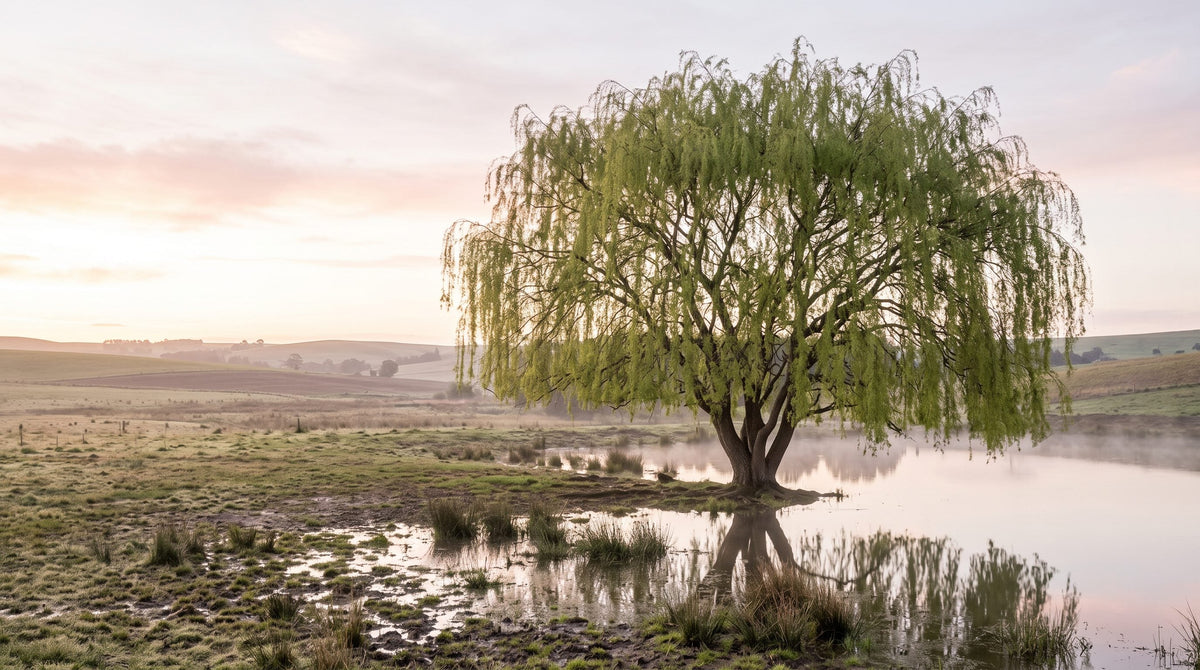
Weeping willow tree pros and cons come down to site. The pros: fast shade, a graceful shape, and roots that thrive in wet soil and hold stream banks. The cons: water-seeking roots that find pipes and septic lines, weak wood that breaks under ice, litter and pests. Plant one only on open, wet ground at least 50 feet from buildings.
Whether a weeping willow is a good choice depends far more on where it goes than on the tree itself. Planted at the edge of a pond, a creek or a low pasture that stays soggy, it grows fast, softens the view and helps hold loose soil in place. Planted beside a house, a driveway or a septic field, the same tree turns into a list of repairs. This guide is for anyone deciding whether their ground can carry one. It covers each pro and con in turn, a plain distance rule for homes, pipes and septic systems, and a yes-or-no site test you can run in a few minutes. The first row of trees below is for wet, open land: the weeping willow itself, plus black willow and black willow live stakes for stream banks and restoration plantings where a native, tall willow fits better. If your yard fails the test, two native alternatives follow.
Weeping willow tree pros and cons

1. Pro: fast shade and a graceful shape
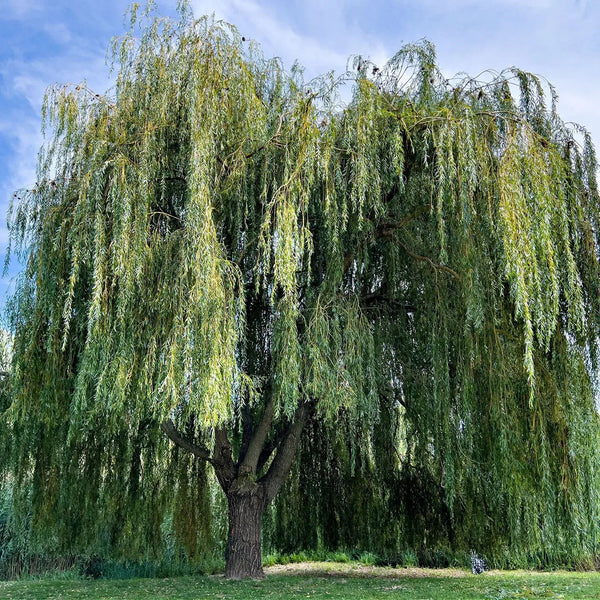
The weeping willow is a rapid grower, so a young tree fills out and casts real shade within a few seasons rather than decades. At maturity it reaches roughly 30 to 40 feet tall and about as wide, with long, sweeping branches that move in the slightest breeze. Few trees soften a large, open property or a waterside view as quickly. If you want fast screening on spacious ground, this is its strongest point.
Tip: Give it full sun or light shade; it grows fastest with steady moisture.
2. Pro: thrives in wet soil and holds banks
Where most trees struggle in soggy ground, a weeping willow is at home. It prefers very moist soil, from acidic to alkaline, which makes it a natural fit beside ponds, streams, rain gardens and low spots that stay wet after storms. Planted on a slope or bank, its roots help control erosion. NC State notes it hosts viceroy caterpillars and supports specialized bees, so a waterside planting adds habitat as well as shade.
Tip: For long stream banks, black willow live stakes let you plant many cuttings at once.
3. Con: water-seeking roots near pipes and septic
The biggest drawback: NC State Extension notes that weeping willow roots are invasive and can damage water and sewage pipes. The roots seek out moisture, so leaky joints, drains and septic fields draw them in. Our rule: plant at least 50 feet from your house, driveway, sidewalks and underground utility lines. For a septic tank and drain field, ask your local health department or septic installer how much more room to leave. Call 811 before you dig.
Tip: Measure from where the trunk will stand, not from the edge of the canopy.
4. Con: weak wood, litter and pests
Fast growth comes with soft, weak wood. Branches crack or break easily, especially under snow and ice, so a willow near a roof, fence or parked car is a real worry in a storm. The tree also drops a steady supply of leaves, twigs and branches. It is prone to aphids, borers, scale, cankers, leaf spots and powdery mildew. For these reasons, NC State does not typically recommend it for home landscapes.
Tip: Have an arborist look over large limbs that hang above lawns, paths or roofs.
5. Site test: yes or no
Answer each question honestly. Is there open ground at least 50 feet from your house, driveway and utility lines? Is the spot wet or near a pond, stream or low area? Is the septic system well away from it? Is the site in USDA zones 6 to 8? Can you live with litter on the lawn? Five yeses mean a willow has a good home. Any no, and choose an alternative below.
Tip: Small city lots and yards over a septic field fail this test.
Native alternatives for wet ground
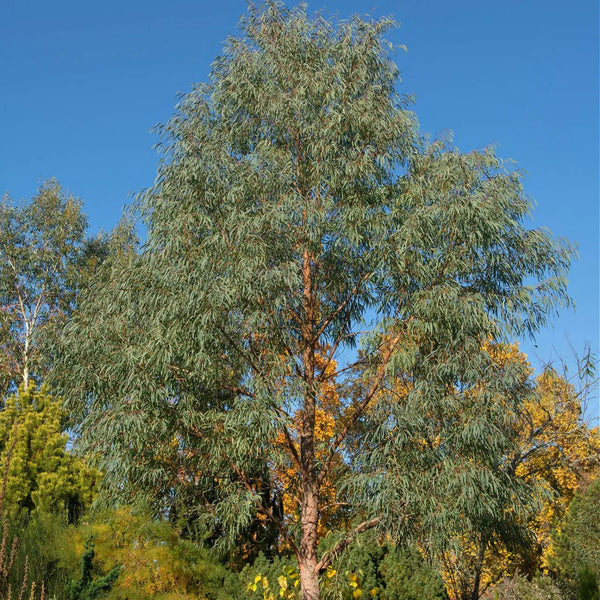
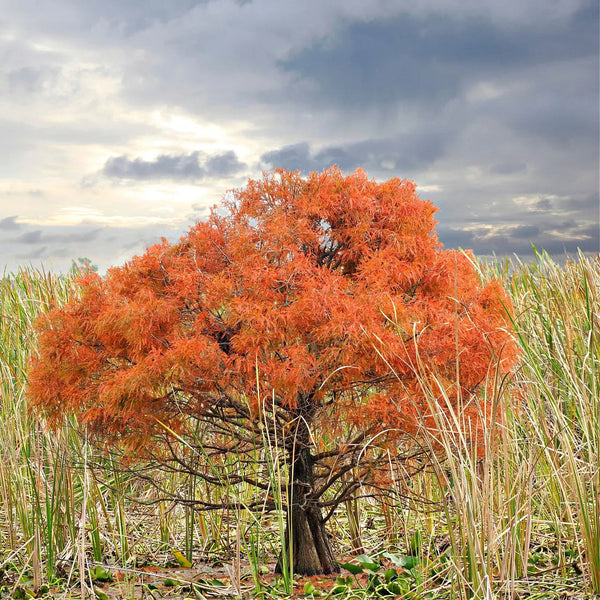
If your site failed the test, you do not have to give up on a tree for wet ground. River birch and bald cypress are native trees that handle moist soil, and they are worth a look when a weeping willow's brittle limbs and steady litter would land too close to your house, drive or patio. Be clear on one point: neither is a small tree. Both grow large, so they still need open space and the same care around buildings and buried lines. River birch brings salmon-to-rust bark that peels in papery layers and fits naturally along creeks, rain gardens and low corners of a property. Bald cypress is a conifer that drops its needles each fall. For a stream bank where you want willow character without the weeping form, black willow is another native choice, also a large tree. Each ships bare root, ready to plant, in quantities that suit one yard or a full restoration project.

Care and keeping
If your site passes, plant in late fall or early spring while the tree is dormant. Dig a hole twice as wide as the roots, set the root collar at soil level, backfill with native soil and water deeply. Keep the soil moist through the first summer, and stake only if wind rocks the young trunk.
Frequently asked questions
Where should you not plant a weeping willow tree?
Avoid planting one within 50 feet of a house, driveway, sidewalk, pool or underground utility line, and keep it well clear of septic tanks and drain fields. Skip small city lots, dry upland sites and spots under power lines, where its size, roots and weak limbs cause the most trouble.
Are weeping willows a good yard tree?
For most small and average yards, no. The tree grows 30 to 40 feet tall and wide, sheds litter, breaks in ice storms and sends roots toward pipes. On a large property with a pond, creek or low wet area far from buildings, though, it is one of the best fast shade trees you can plant.
How far away from a house should you plant a weeping willow tree?
Plant a weeping willow at least 50 feet from your house. Give the same clearance to driveways, sidewalks and buried water or sewer lines, and ask your local health department about septic clearance. Measure from the planned trunk location, and have utilities marked by calling 811 before you dig.