
The short answer
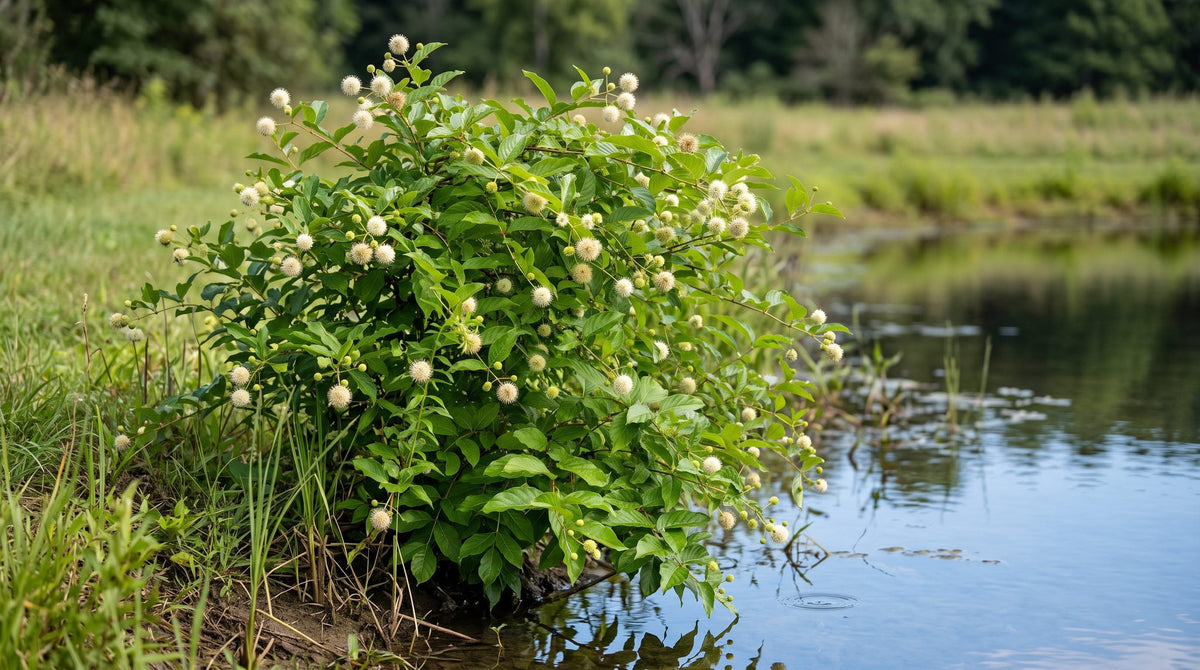
A buttonbush shrub (Cephalanthus occidentalis) is a native wetland shrub that grows 5 to 8 feet tall and 3 to 6 feet wide, with round white flower heads from June to August. Plant it where soil stays wet: pond edges, rain gardens and stream banks. Start it from live stakes for large banks or rooted shrubs for quicker cover.
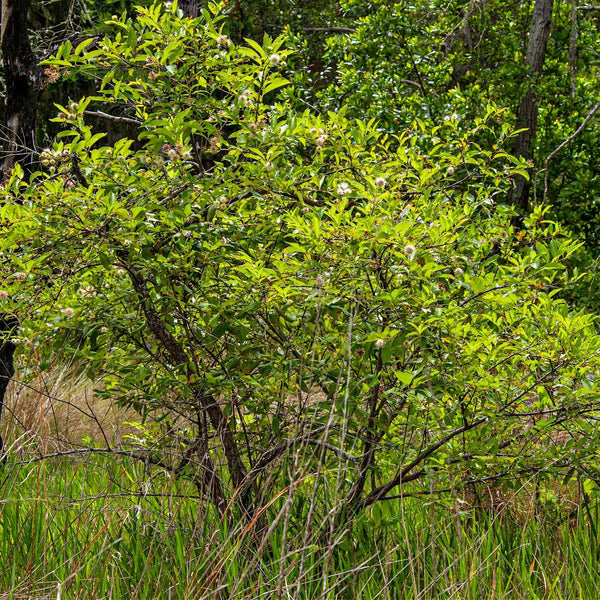
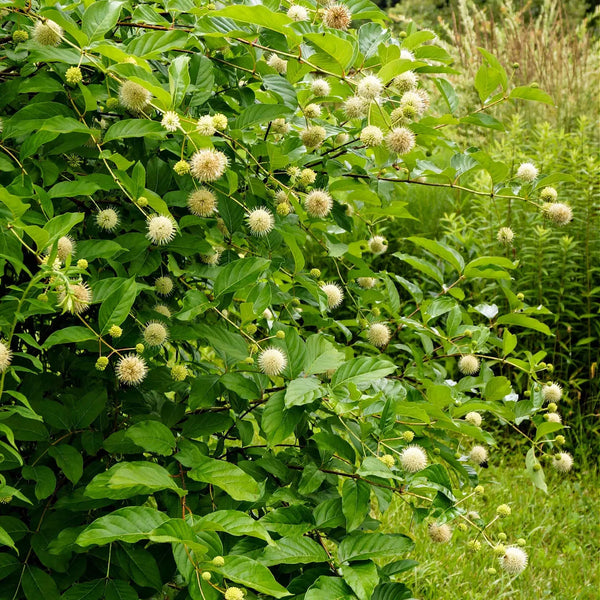
The buttonbush shrub is a native plant that is happy with its roots under water. Both our Button Bush Shrubs and Button Bush Live Stakes are listed for zones 3 to 9, and our records note the plant can stand in up to three feet of water, so it fits low spots where most landscape shrubs rot. NC State Extension puts its growth rate at medium and its usual size at 5 to 8 feet, though an old plant can become a small tree near 20 feet. It grows in clay, loam or sand, in full sun to part shade. The leaves are large and glossy, the 1½-inch flower balls are fragrant, and the reddish-brown seed heads hang on into winter. Bees, butterflies and hummingbirds work the blooms, and the shrub is deer-resistant. That mix makes it a workhorse for erosion projects, retention ponds and ditches as well as home rain gardens. For more species that hold wet soil, browse our Erosion Control Plants.
Buttonbush shrub planting supplies
1. Pick a wet, sunny site
Choose ground that stays moist or wet most of the year: a pond edge, the low end of a rain garden, a ditch line or a stream bank. Buttonbush takes full sun to part shade, but it grows fastest in full sun. It handles clay, loam and sand. Skip dry slopes and upland beds, since the plant does not suit soil that dries out.
Tip: Mark the wettest spots after a heavy rain; that is where buttonbush belongs.
2. Choose live stakes or rooted shrubs
Live stakes are dormant cuttings with no roots yet. They suit long stream banks and shorelines, because you push them straight into wet soil and they root in place, so a crew can cover a lot of ground quickly. Rooted shrubs arrive with a root system, so they suit rain gardens, pond edges near the house and spots you want filled sooner. Our live stakes come in 1-2, 2-3 and 3-4 foot lengths.
Tip: Use both: stakes along the waterline, rooted shrubs higher on the bank.
3. Plant live stakes while dormant
Plant stakes from late fall through early spring, while the stems are leafless. Keep the buds pointing up and push or tap each stake into moist soil so about two-thirds of its length sits below ground. In firm soil, a pilot hole made with a steel bar keeps the bark from splitting. Firm the soil around each stake, then trim any crushed tops cleanly.
Tip: Set stakes in staggered rows from the waterline up the bank so the roots knit together.
4. Plant bare-root buttonbush shrubs
Soak the roots for a few hours before planting. Plant in the dormant season or in spring before high water, when you can reach the site. In soft, mucky soil, dig a hole wide enough to spread the roots and set the plant at the level it grew in the nursery. Firm the soil well with your boot so the plant cannot float or wash out, and water it in if the ground is not already wet.
Tip: Plant at the water's edge, not in open water, until the roots take hold.
5. Prune lightly in late winter
Buttonbush needs little pruning. In late winter, before new growth starts, cut out dead, broken or crossing stems at their base. If an old shrub gets leggy or too tall, remove a few of the oldest stems near the ground each year to push fresh growth from the base. Leave the seed heads in place through winter, since birds and ducks feed on them.
Tip: Thin old stems instead of shearing the top, which keeps the natural rounded shape.
Pair buttonbush with other wet-site natives
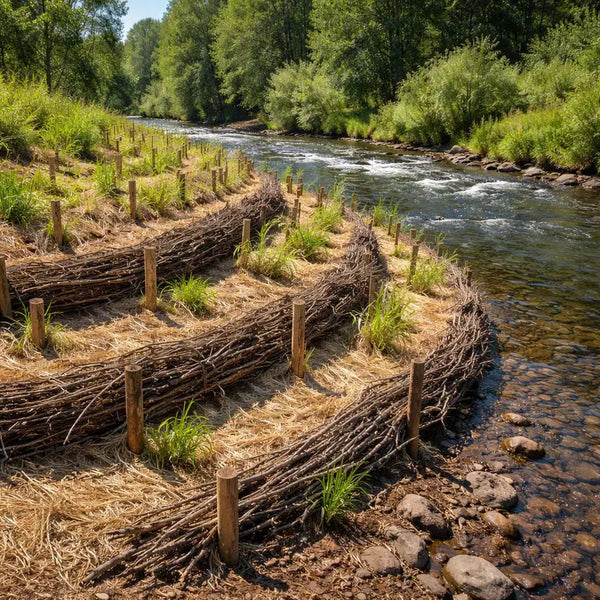
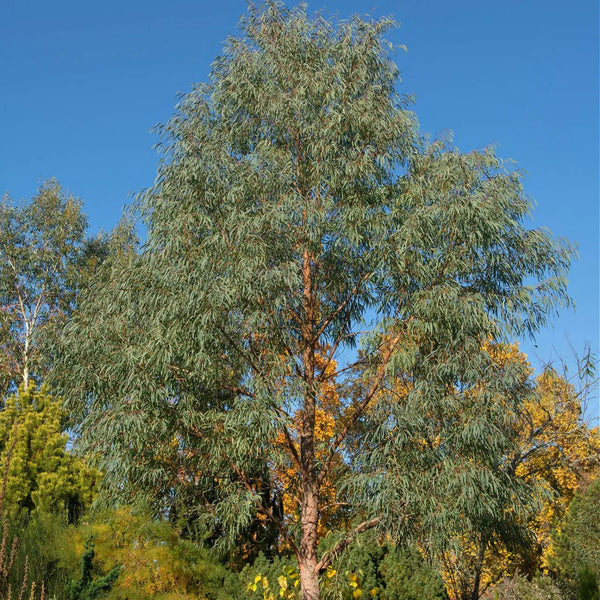
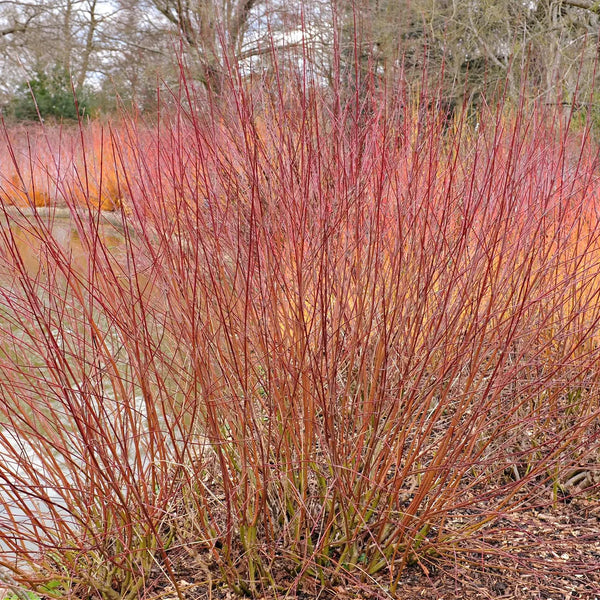
On a stream bank or shoreline, buttonbush works best as one layer of a mixed planting rather than a solid row. Its job is the wettest band, right at the waterline, where it tolerates standing water. Above it, Black Willow Live Stakes and Silky Dogwood Live Stakes root along the bank and add more stems to hold soil. Mixing species also spreads the risk: if one struggles on a site, the others keep the bank covered. All three go in the same way, as dormant stakes pushed into moist soil, so one crew can plant them in a single pass. On steeper or faster-moving banks, Brush Layers laid along the bank add structure while the stakes take root. For a home rain garden, keep it simpler: one or a few buttonbush shrubs in the low center, with moisture-loving perennials around the edges. Our Live Stakes collection lists more native species sold as cuttings.
Care and keeping
Treat the bark as harmful if eaten. NC State Extension lists buttonbush bark as toxic: ingesting it can cause vomiting, convulsions and paralysis, and it rates the severity as low. If a person or pet chews the bark, call a doctor, a vet or a poison control center for advice.
Frequently asked questions
How do I prune a buttonbush?
Prune in late winter, before the buds break. Remove dead, broken and crossing stems first. To renew an old, leggy shrub, cut a few of the oldest stems near the ground each year instead of shearing the top. Buttonbush needs little pruning, so many plantings on banks and ponds need none at all.
Is buttonbush toxic to dogs?
Treat it as a risk. NC State Extension lists the bark as toxic, with vomiting, convulsions and paralysis possible if it is eaten, and rates the severity as low. The listing does not name dogs, so call your vet if your dog chews or swallows the bark.
Is buttonbush edible?
No. Buttonbush is not grown as a food plant, and NC State Extension lists its bark as toxic. Grow it for wildlife instead: bees, butterflies and hummingbirds visit the summer flowers, and birds and ducks feed on the seed heads. The round fruit capsules turn reddish brown and stay on the stems into winter.