
The short answer
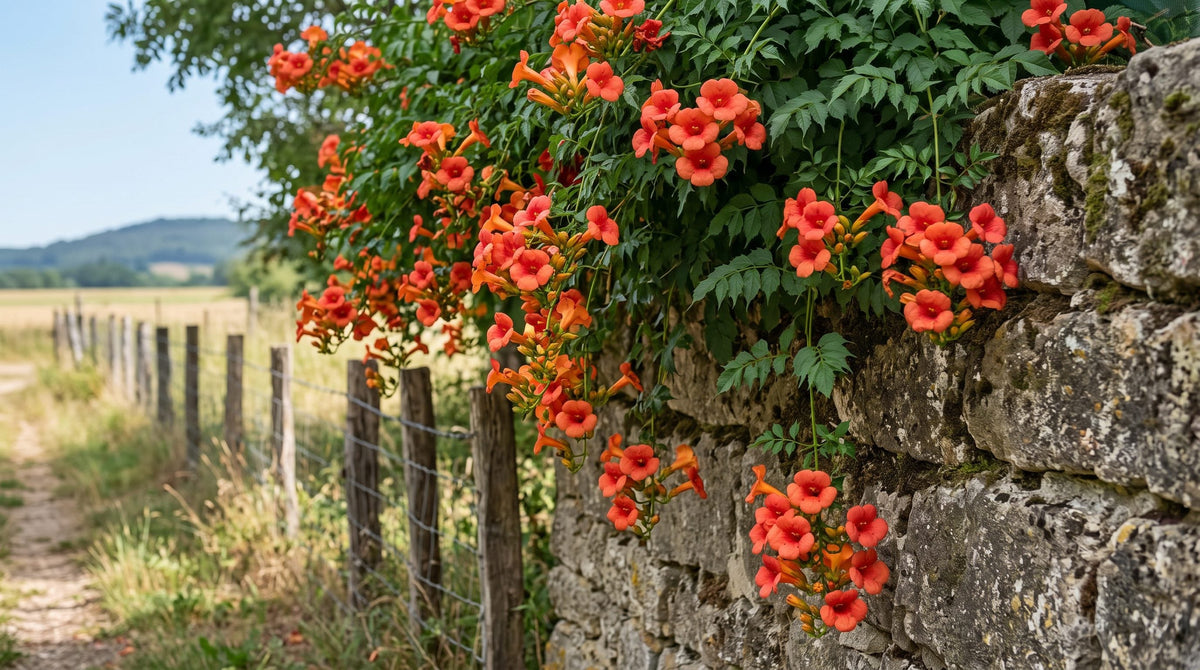
The hummingbird vine is trumpet creeper, Campsis radicans, a woody perennial vine native to the U.S. It comes back every year in zones 4 to 9 and opens orange to red trumpet flowers through summer. Plant it in full sun, well away from your house, on a strong support, and pull its suckers often.
Two different plants share the name hummingbird vine, and it pays to know which one you are buying. Most growers and nurseries mean trumpet creeper, also sold as trumpet vine. It is a native woody vine that climbs by small rootlets and can reach nearly 40 feet. Its tubular flowers suit a hummingbird's long beak, so the birds visit all summer. The other plant is cypress vine, a morning glory relative with fine, feathery leaves and small red star-shaped flowers. Gardeners usually grow it from seed each year. This guide covers trumpet creeper, the one that comes back on its own. It is easy to grow and hard to stop, so most of the work is choosing the right spot and keeping it there. Below you will find what to buy, how to site and plant it, how to prune for flowers, and a simple routine for runners and suckers. Our wholesale packs make it simple to plant a whole fence line or hedgerow.
Hummingbird vine and planting partners


1. Pick a sunny spot away from the house
Full sun gives the most flowers. The vine grows in part shade, but shady spots bloom less. It takes almost any soil, from dry to rich, as long as it drains. Keep it well away from your house. Its clinging roots can work under shingles and damage siding and foundations. Keep it off busy walkways too, since the long stems get in the way.
Tip: A fence line, barn wall or open hedgerow at the edge of the yard suits it best.
2. Give it a sturdy support
Trumpet creeper is a heavy, woody vine that can reach nearly 40 feet. Small rootlets along the stems let it grip wood and stone on its own. Choose a support that can carry real weight for many years: a stout post-and-rail fence, a metal arbor, a stone wall or a large dead tree. Light trellises and vinyl panels bend or break as the stems thicken.
Tip: Tie young stems to the support at first. The rootlets take over once they touch it.
3. Plant bare-root vines at soil level
Soak the roots in a bucket of water for an hour or two before planting. Dig a hole wider than the root spread and about as deep. Set the vine so the crown, where roots meet stem, sits at soil level. Fill with loose soil, firm it gently and water well. For a fence line, give each plant its own section of support.
Tip: Keep the soil lightly moist until new leaves appear, then water only as needed.
4. Prune hard once a year
Trumpet creeper flowers on new growth, so a hard cut does not cost you blooms. Prune once a year in late winter or early spring, before the leaves open. Cut the side shoots back to a few buds each. Remove dead, weak or wayward stems at the base. Keep a few strong main stems as a framework and train them along the support.
Tip: Trim stray summer shoots that reach for gutters, roofs or nearby trees.
5. Keep runners and suckers in check
Trumpet creeper spreads by underground runners that send up new shoots, called suckers, around the base. Walk the bed every few weeks in the growing season. Pull young suckers while they are soft, or cut them at ground level. Mow a strip around the planting so new shoots get cut. Bag cut suckers rather than leaving them on the bed.
Tip: Remove seed pods in fall if you do not want seedlings nearby.
Hummingbird vine in hedgerows and pollinator plantings
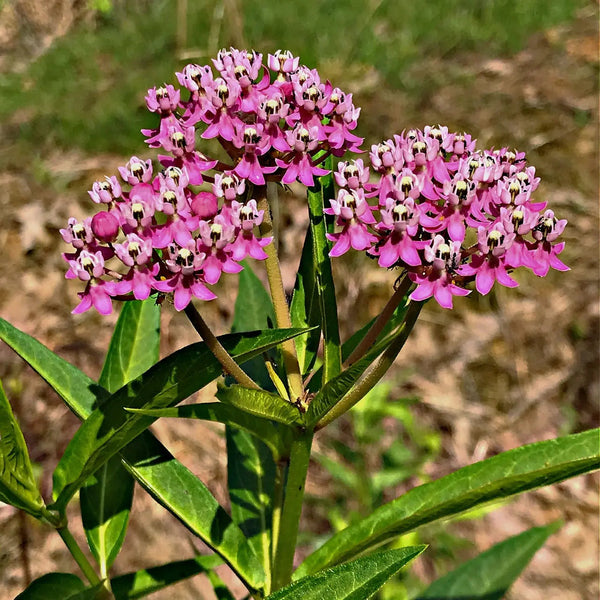
On larger sites, trumpet creeper earns its keep where its vigor is an asset. Run it along a field fence, a farm hedgerow or the back edge of a pollinator strip. There it can cover posts and wire without reaching buildings. It pairs well with solid shrubs and hardwood trees, which give it something sturdy to scramble through. Its flowers feed hummingbirds and bees from summer into early fall. After bloom, bean-like seed pods up to six inches long hang on the stems. For a planting that feeds pollinators at ground level too, add common milkweed in a sunny bed nearby. It grows 3 to 5 feet tall in zones 3 to 9 and spreads by its roots into a patch, so give it a bed of its own. Virginia creeper is another native vine for long fences. Its leaves turn bright red in fall, and birds eat its berries. Both suit restoration and habitat projects ordered in wholesale packs.
Care and keeping
Once settled in, trumpet creeper needs very little. It needs no fertilizer, and extra feeding only pushes more rampant growth. Water young plants as needed through their first summer, then water established vines only in long dry spells. Your yearly jobs are one hard spring prune and regular sucker pulling through the growing season.
Frequently asked questions
Does the hummingbird vine come back every year?
Yes. Trumpet creeper is a woody perennial, hardy in USDA zones 4 to 9. The leaves drop in fall and the stems sit bare through winter. New shoots grow in spring and flower from summer into early fall. Cypress vine, which shares the name, is usually grown as an annual from seed.
Is hummingbird vine invasive?
Trumpet creeper is native to the U.S., but it spreads aggressively. Underground runners send up suckers well beyond the main plant, and it climbs over plants in its path. In the right place, with a mowed edge and regular sucker pulling, it stays manageable. Avoid planting it beside the house or a small garden bed.
Hummingbird vine vs trumpet vine: are they the same?
Yes. Hummingbird vine, trumpet vine and trumpet creeper are common names for the same plant, Campsis radicans. Our Trumpet Creeper and Trumpet Vine listings are both this species. Cypress vine is the one that differs: a morning glory relative with feathery leaves and small red star-shaped flowers, usually grown from seed each year.