

The short answer
The pussywillow plant is Salix discolor, a native North American willow that grows as a large shrub or small tree. It loves moist soil and sun, and its silvery catkins open in late winter. Start it from live stakes pushed into damp ground while dormant, and keep it 30 to 50 feet from septic lines and pipes.
Pussy willow is one of the first plants to wake up each year. Fuzzy silver catkins line its bare stems in late winter, before most shrubs leaf out. Only male plants carry the showiest catkins, which turn gold with pollen as they open. The native species, Salix discolor, grows wild along stream banks, marsh edges and ditches. That tells you what it wants: soil that stays damp, and full sun to part shade. In a yard it makes a fast screen, a rain garden shrub or a tall hedge. On a project site it helps hold a wet bank in place. The simplest way to start it is with live stakes. A live stake is a dormant cutting with no roots yet. Pushed into moist soil, it grows roots along the buried part and leafs out from the buds above. The companion stakes in the row below plant the same way and can share the bed. Here are the steps and the root rule.
Live stakes for a pussywillow plant
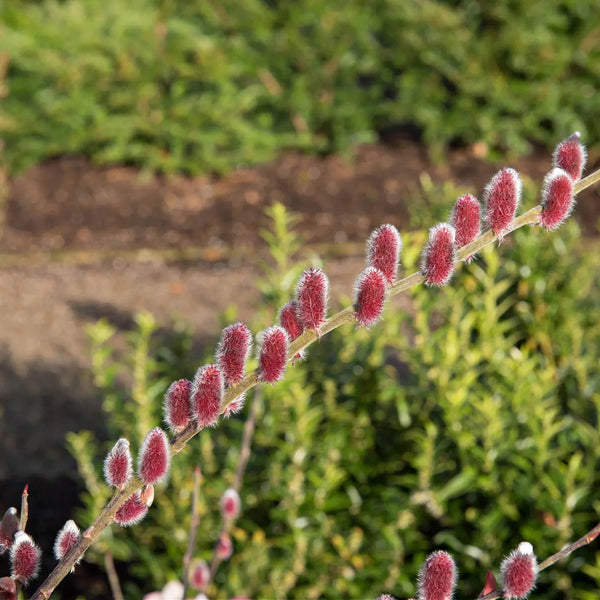

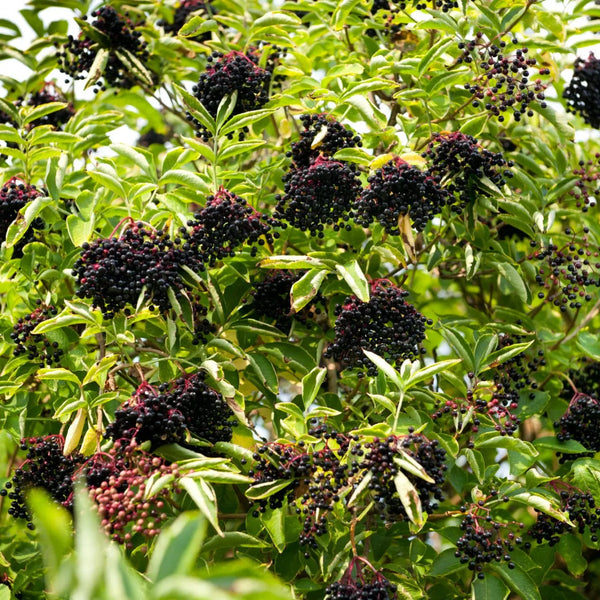
1. Pick a damp, sunny spot away from pipes
Choose ground that stays moist through summer, such as a stream bank, pond edge, wet ditch or low corner of the yard. Full sun to part shade suits it best. Pussy willow can reach shrub or small-tree size, so give it room to spread. Before you plant, mark where septic lines, drain fields, sewer and water lines run, and stay 30 to 50 feet clear of them.
Tip: The care note below explains why the roots need that room.
2. Plant while the stakes are dormant
Live stakes root best when they go in dormant, before the buds break. That means late winter or early spring in most places, once the ground can be worked. Plant as soon as your order arrives, and keep the bundle cool, shaded and damp until every stake is in the ground.
3. Soak the stakes and push them in buds-up
Soak the cut ends in water overnight before planting. Check which way the buds point, and set each stake with the buds facing up. Push or tap it in so about two-thirds of its length is underground, with a couple of buds showing. Firm the soil around it so no air pockets remain.
Tip: In hard ground, open a pilot hole with a steel bar first.
4. Keep the soil moist the first season
New stakes have no roots to fall back on, so moisture decides whether they take. Water during dry spells through the first summer, deeply rather than often. A layer of mulch around each stake helps hold moisture and keeps grass from crowding it. Leaves may appear before roots are strong, so keep watering even once the stake looks green.
5. Prune right after the catkins fade
Pussy willow sets next year's catkins on the stems it grows this summer. So prune in spring, just after the catkins finish, and you lose none of the next show. Each year, cut out about a third of the oldest, thickest stems at the base. If a plant gets tall and leggy, cut the whole shrub back hard after bloom; it regrows quickly.
Tip: Avoid hard cuts in late autumn, when the plant has no time to recover.
Other native willows for wet ground
Pussy willow is not the only willow that starts easily from stakes. The name also covers other willows with fuzzy buds, including the non-native goat willow, Salix caprea. For the native plant, look for Salix discolor on the label. Silky willow, Salix sericea, is a close native match in size. It grows as a multi-stemmed shrub or small tree, about 6 to 15 feet tall. It tolerates wet soil, deer and black walnut, and it copes with drier soil than many willows. Black willow, Salix nigra, is a different scale of plant. Left to grow, it becomes a large tree of 70 to 80 feet, hardy in zones 3 to 9. It suits long stream banks and pond edges, well away from roofs and drives. Pick pussy willow for early catkins on a shrub you can keep in check. Pick silky willow for a bank with drier spells, and black willow for fast shade along a long shoreline.


Care and keeping
Willow roots are dense, shallow and seek out water, and they can work into cracked pipes. An extension expert advises keeping a pussy willow 30 to 50 feet from septic lines and mounds. Use the same rule for sewer and water lines, and keep it back from sidewalks and drives too.
Frequently asked questions
Are willow shrub roots invasive?
Willow roots are aggressive. They grow dense and shallow and seek out water, so they find cracks in pipes and septic lines. Keep a pussy willow 30 to 50 feet from those lines. On a wet bank the same habit is a strength, because the roots bind loose soil in place.
When should pussy willow be pruned?
Prune in spring, right after the catkins fade. The plant sets next year's catkins on this summer's growth, so spring pruning keeps the next show. Each year, remove about a third of the oldest stems at the base. Avoid hard cuts in late autumn, when the plant has no time to recover.
Where do pussy willows grow?
The pussy willow, Salix discolor, is native to North America. In the wild it grows along streams, marshes, ditches and other wet ground. In gardens it does best where the soil stays moist to wet, with full sun to part shade. Save it for the low, damp parts of a property rather than a dry slope.