
The short answer
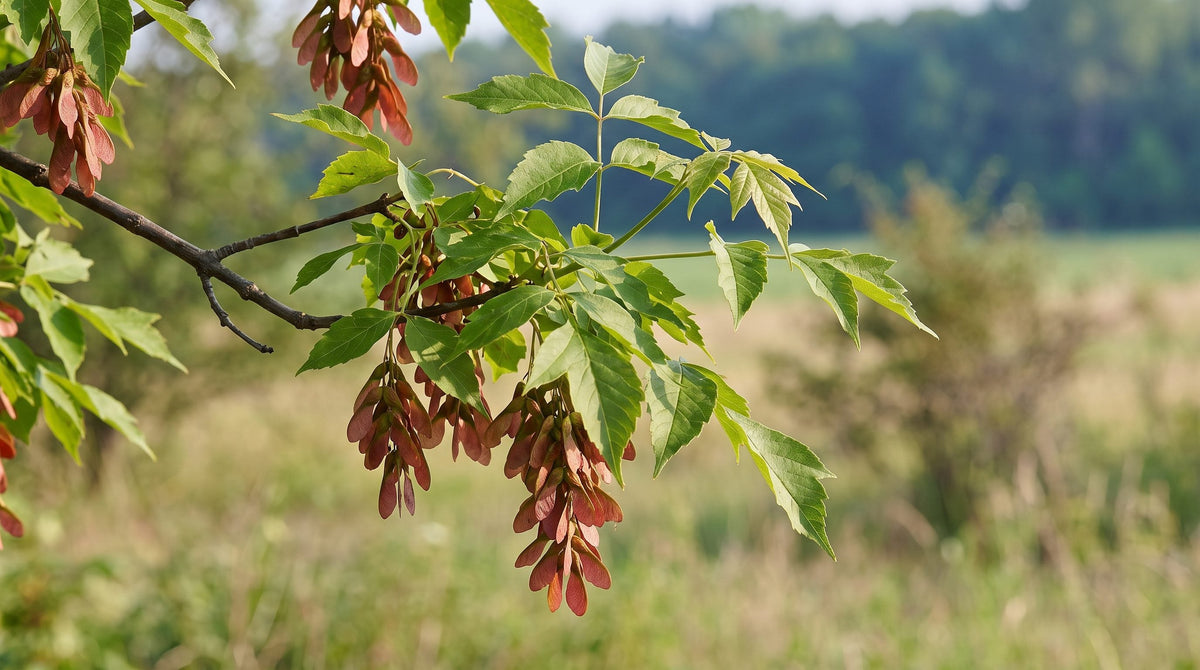
Box elder tree identification starts with the leaves. Box elder (Acer negundo) is a maple whose leaves grow in opposite pairs, each split into three to five toothed leaflets, sometimes seven. Then check for green to purplish twigs with a whitish coating, paired winged seeds in drooping clusters, and gray-brown bark with shallow grooves.
Box elder is the odd one out among maples. Most maples have simple, hand-shaped leaves, but box elder's leaves are divided into leaflets. That is why it is also called ash-leaf maple. That one trait sends many people down the wrong path. Young box elders get mistaken for poison ivy, and older ones for ash or red maple. This guide walks you through five checks, in the order that settles the question fastest. They cover how the leaves sit on the twig, the leaflets, the twigs and bark, the seeds, and the look-alikes. Some checks work in winter too, when the leaves are gone. You will also see why seed-bearing female trees matter if boxelder bugs are a worry. Then we cover the honest side of planting one. It grows fast and takes almost any soil, but it is not the right tree for every yard. You will see where it earns its place, and where another native tree serves better.
Box elder tree identification steps
1. Check how the leaves sit on the twig
Start with leaf arrangement, the way leaves attach to the stem. On a box elder, leaves grow in opposite pairs, two stalks directly across from each other. Few trees branch like this: mainly maples such as red and silver maple, ash, dogwood and buckeye. Add feather-like compound leaves, and only box elder and ash are left. The Missouri Department of Conservation describes box elder leaves as opposite and compound.
Tip: In winter, look for paired buds and leaf scars instead.
2. Count the leaflets on each leaf
Each box elder leaf is compound, meaning one stalk carries several smaller leaflets. Expect three to five, sometimes seven, arranged like a feather. The leaflets are about 2 to 4 inches long, light green on top, with coarse, uneven teeth. Some leaflets have a lobe or two, which can make them look like small maple leaves. A leaf with only three leaflets is common on young trees.
Tip: Three leaflets on a seedling? Go back to step one and check the arrangement.
3. Look at the twigs and bark
Box elder twigs are smooth and slender, green to olive, and sometimes purple. Many carry a whitish coating that rubs off on your thumb. This is one of the best winter clues. Bark on young trunks is smooth and greenish. On older trees it turns pale gray to brown, with long thin ridges and shallow grooves. Bark alone rarely settles it, so pair it with the twigs.
Tip: Rub a green twig. A powdery coat that wipes away points to box elder.
4. Find the seeds, and know male from female
Box elder trees are either male or female. Only females set seed: paired, winged keys like other maples, hanging in drooping clusters. They ripen from late summer into fall and often hang on through winter. Male trees never carry them. This matters for planting too. Female trees drop the seed that boxelder bugs like, while males stay tidier.
Tip: Dry winged seed clusters in winter are a strong sign of a female box elder.
5. Rule out poison ivy, ash and red maple
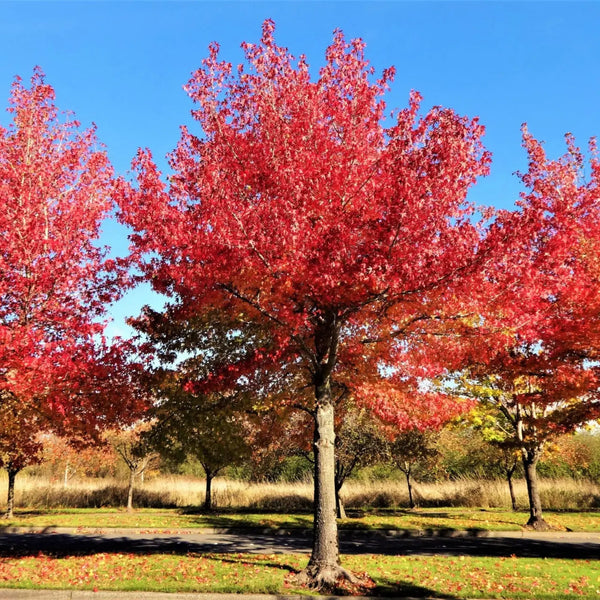
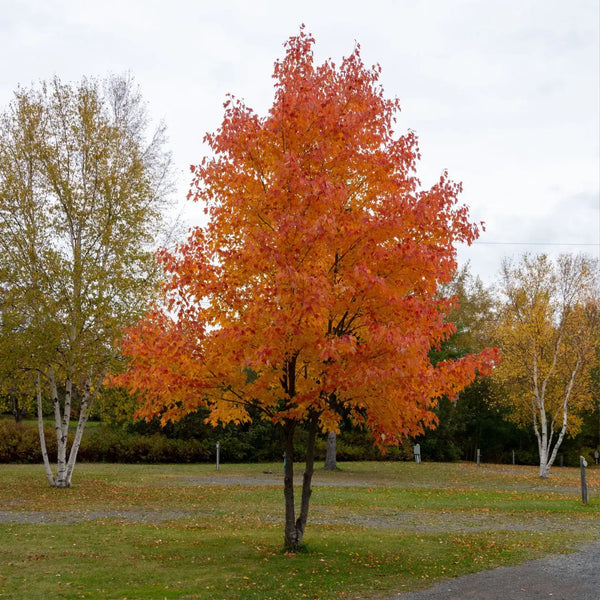
Poison ivy also has three leaflets. But its leaf sets alternate along the stem, and the middle leaflet has a longer stalk, says University of Maryland Extension. Ash has opposite leaves too, usually with five or more leaflets, so a five-leaflet leaf could be either. Check the seeds: ash seeds have one wing, box elder seeds come in pairs. Red maple has simple, hand-shaped leaves, never leaflets.
Tip: When in doubt, check two or three twigs, not just one.
Pros and cons of planting box elder
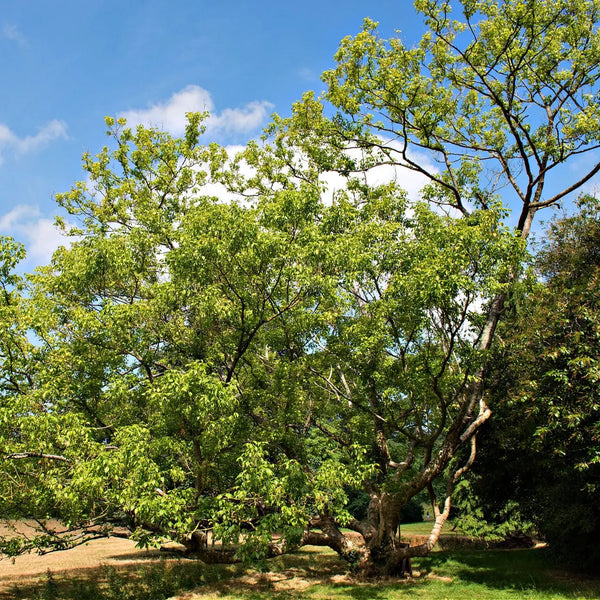
Box elder earns its place where speed and toughness matter more than looks. It grows fast to 30 to 50 feet and takes full sun or part shade. It handles clay, loam, sand and wet spots in zones 3 to 9. Birds and small mammals eat the seeds. That makes it a good fit for windbreaks, creek banks, field corners and low ground that stalls other trees. For a windbreak, set trees 15 to 20 feet apart. The downsides are real. The wood is soft and brittle, so limbs can snap in strong wind or heavy snow. The tree is on the short-lived side, and seeding females draw boxelder bugs. Plant it away from roofs, drives and the house, out where dropped limbs and bugs won't bother anyone. If you want other fast natives for the same wet ground, black willow and river birch both handle flooding. Black willow suits stream edges, and river birch adds peeling salmon-to-rust bark.


Care and keeping
Planting bare-root box elder: soak the roots for an hour, then dig a hole wide enough to spread them. Set the tree at the depth it grew, firm the soil and water deeply. Mulch a ring around the base, kept off the trunk, and water weekly through the first summer.
Frequently asked questions
What kind of tree is a boxelder?
Boxelder, also spelled box elder, is Acer negundo, a fast-growing maple native to North America. Unlike most maples, it has compound leaves split into leaflets, so it is also called ash-leaf maple. It reaches 30 to 50 feet, grows in zones 3 to 9 and tolerates wet and poor soil.
What are the pros and cons of box elder trees?
The pros: box elder grows fast, takes almost any soil including wet ground, handles sun or part shade, and feeds birds and small mammals with its seeds. The cons: its wood is soft and brittle, it is short-lived, and female trees drop seed that draws boxelder bugs.
Why are box elder bugs attracted to box elder trees?
Boxelder bugs are drawn to the seed that female box elder trees drop. Male trees set no seed, so they draw fewer. If the bugs are a worry near the house, plant box elder farther out, in a windbreak, along a creek bank or at a field edge.
Box elder and its look-alikes compared
| Feature | Box elder | Poison ivy | Ash | Red maple |
|---|---|---|---|---|
| Leaf arrangement | Opposite | Alternate | Opposite | Opposite |
| Leaf type | Compound, 3 to 5 leaflets, sometimes 7 | Compound, 3 leaflets | Compound, usually 5 or more leaflets | Simple, hand-shaped |
| Deciding clue | Coarse, uneven teeth, some leaflets lobed | Middle leaflet on a longer stalk | Single-winged seeds | One leaf, no leaflets |
| Seeds | Paired winged keys, female trees only | No winged keys | Single-winged seeds | Paired winged keys |
| Growth | Tree | Vine or low plant | Tree | Tree |
Box elder
- Leaf arrangement
- Opposite
- Leaf type
- Compound, 3 to 5 leaflets, sometimes 7
- Deciding clue
- Coarse, uneven teeth, some leaflets lobed
- Seeds
- Paired winged keys, female trees only
- Growth
- Tree
Poison ivy
- Leaf arrangement
- Alternate
- Leaf type
- Compound, 3 leaflets
- Deciding clue
- Middle leaflet on a longer stalk
- Seeds
- No winged keys
- Growth
- Vine or low plant
Ash
- Leaf arrangement
- Opposite
- Leaf type
- Compound, usually 5 or more leaflets
- Deciding clue
- Single-winged seeds
- Seeds
- Single-winged seeds
- Growth
- Tree
Red maple
- Leaf arrangement
- Opposite
- Leaf type
- Simple, hand-shaped
- Deciding clue
- One leaf, no leaflets
- Seeds
- Paired winged keys
- Growth
- Tree
