
The short answer
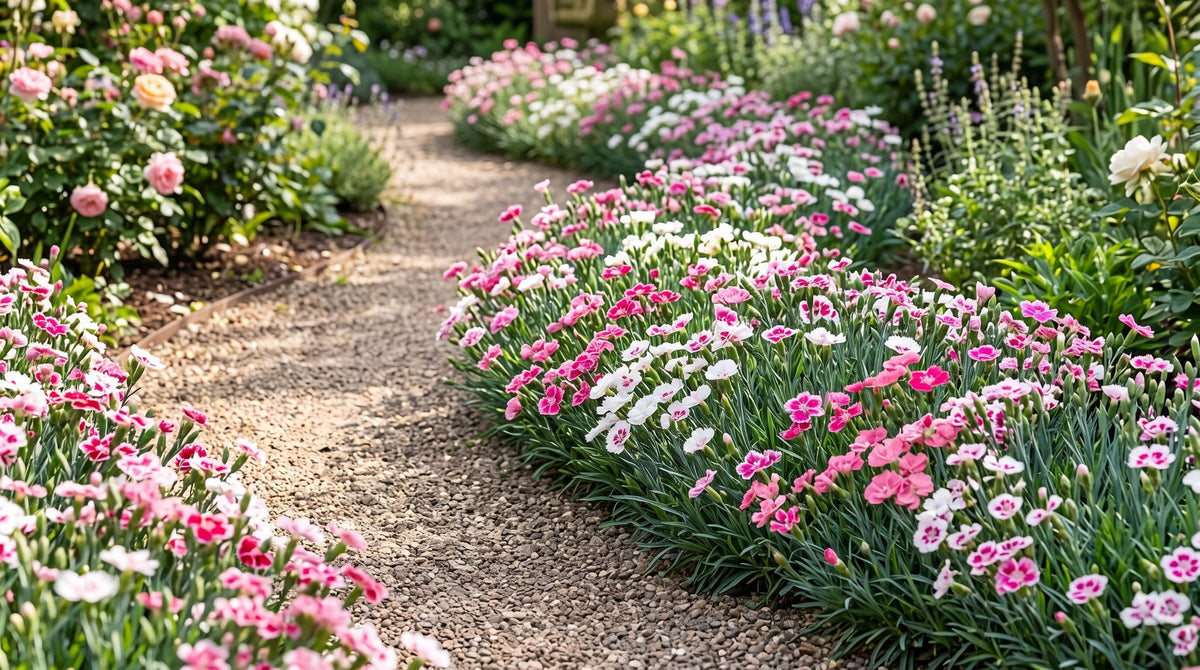
A dianthus plant is a low, tufted flower known as pinks, with fringed petals in white, pink and rose, often clove-scented. Garden pinks are perennials that come back each year; our mix is hardy in zones 3 to 9. Sweet William usually lives two years, and bedding types are annuals. Give pinks full sun and soil that drains.
Dianthus is a big family, and the name covers several kinds of plant that behave quite differently. Pinks are the low, tidy ones with grassy, blue-green leaves and fringed petals that look trimmed with pinking shears. Carnations are their taller cousins, a favorite for bouquets. Sweet William carries its blooms in clusters and usually flowers in its second year before fading, though it may reseed. Bedding dianthus sold in spring trays is often grown as an annual. If you want a plant that returns, choose perennial pinks. Our Dianthus Plant is a mix of pinks that grows 6 to 24 inches tall and is hardy in zones 3 to 9. It ships bare-root in packs of 25 to 500, so one order can edge a single path or a whole display bed. The steps below cover where to plant, how to set bare roots, how far apart to space them and how to keep flowers coming all summer.
Dianthus plant and sunny partners



1. Choose full sun and fast drainage
Pinks want full sun and soil that drains quickly. Heavy, wet ground is the one place they fail, because standing water rots the center of the clump. Good spots include rock gardens, wall tops, path edges, gravel beds, sunny borders and containers. If your soil is clay, raise the bed or work in grit before you plant. A spot where puddles linger after rain is a spot to skip.
Tip: Set pinks at the front; black eyed Susan, 2 to 4 feet tall, fills in behind.
2. Plant bare roots with the crown at soil level
Soak the roots in water for about an hour before planting. Dig a hole wide enough to spread the roots out flat. Set each plant so the crown, where the stems meet the roots, sits right at soil level, never buried. Firm the soil around it and water well. Pinks sulk when the crown sits too deep, so keep it shallow rather than tucking it down into the hole.
3. Space plants 8 to 12 inches apart
Spacing decides how fast a row knits into a solid edge. For a single row along a path, a pack of 25 runs about 17 feet at 8 inches apart, 21 feet at 10 inches and 25 feet at 12 inches. A pack of 100 runs roughly 67, 83 and 100 feet. For a filled bed at 10 inches, 25 plants cover about 17 square feet and 500 cover about 350.
Tip: Go closer for a quick, full edge; go wider to stretch a pack further.
4. Deadhead and shear for more flowers
Snip off spent flowers through summer and a plant keeps blooming longer. When a clump looks tired in late summer, shear it back. It answers with a tidy flush of new growth. Shasta daisy behind the edge takes the same treatment: deadhead it to keep flowers coming. Sweet William may reseed if you leave a few flower heads to ripen, filling bare spots on its own.
Tip: Cut a handful for a jar indoors; many pinks carry a spicy, clove-like scent.
Fire pink for shade, phlox for height
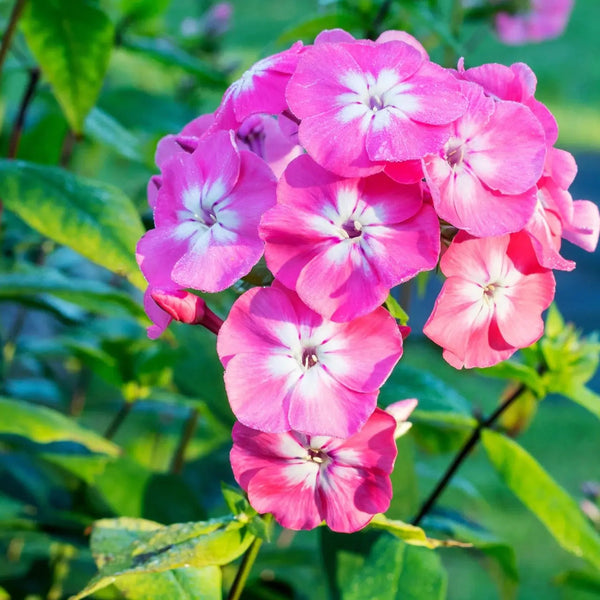
Pinks need sun and dry feet, so a shady or moist bed calls for a different plant. Fire pink is worth a note here. Despite the name, it is not a dianthus. Ours is Spigelia marilandica, a native woodland perennial also sold as Indian pink. It grows 1 to 2 feet high in zones 5 to 9 and likes dappled sun or shade with moist, acidic soil that drains. In May and June it carries scarlet tubes that open into a yellow star, and hummingbirds visit all through the bloom. Space it 12 to 18 inches apart. For height behind a dianthus edge, tall phlox brings fragrant flowers in shades of pink, lavender, salmon and purple from mid to late summer. It grows well in full sun and tolerates partial shade, so it bridges sunny and shadier parts of a border. Both come in packs of 25 to 500, like our pinks, so one order can plant the whole bed.

Care and keeping
Drainage is the whole game with dianthus. Water new plants well, then let the soil dry between drinks, since soggy ground rots the center of the clump. In winter the same rule holds: wet, heavy soil does more harm than cold, as pinks are hardy to zone 3. If your bed stays soggy, raise it or add grit.
Frequently asked questions
Do dianthus come back every year?
Perennial pinks do. Garden pinks, such as cheddar and cottage pinks, return year after year, and our mix is hardy in zones 3 to 9. Sweet William usually blooms in its second year, then declines, though it may reseed. Bedding dianthus sold in spring trays is usually grown as an annual and replanted each year.
Where is the best place to plant dianthus?
Plant dianthus in full sun, in soil that drains fast. Rock gardens, wall tops, path edges, gravel beds, sunny borders and containers all suit it. Avoid low spots where water stands after rain, since wet ground rots the center of the clump. On heavy clay, raise the bed or mix in grit first.
How do you get dianthus to spread?
Pinks fill in as tidy tufts, so spacing does most of the work. Plant them about 8 inches apart for a fuller edge, rather than the 12 inches that stretches a pack. Shear tired clumps in late summer for a fresh flush of new growth. Sweet William may also reseed if you leave a few flower heads to ripen.