
The short answer
The best fern companion plants share the fern's shade and soil moisture. In moist shade, pair sensitive fern with foam flower. In average woodland shade, pair New York fern with wild ginger. In rich, leafy soil, pair maidenhair fern with Solomon's seal. Add Virginia bluebells or trillium for spring flowers before the fronds open.
Hostas and coral bells are the usual answer for what to plant with ferns. They work, but woodland plants that grow beside ferns in the wild often suit a shade bed better. Every fern also wants something a little different. A sensitive fern likes damp ground, while a maidenhair fern wants the loose, leafy soil of a hardwood forest floor. Pick a partner for the wrong site and one of the two will struggle. This guide starts with your site instead. Work out how wet your shade stays, choose the fern that fits it, then add a woodland partner that likes the same conditions. Each pairing below uses plants we grow and ship, so you can plant a whole bed from one order. You will also find spacing based on each plant's mature spread, plus spring wildflowers that bloom before the fronds fill in. Browse our full range of fern plants if your site calls for a different fern.
Fern companion plants by site

1. Read your site's moisture first
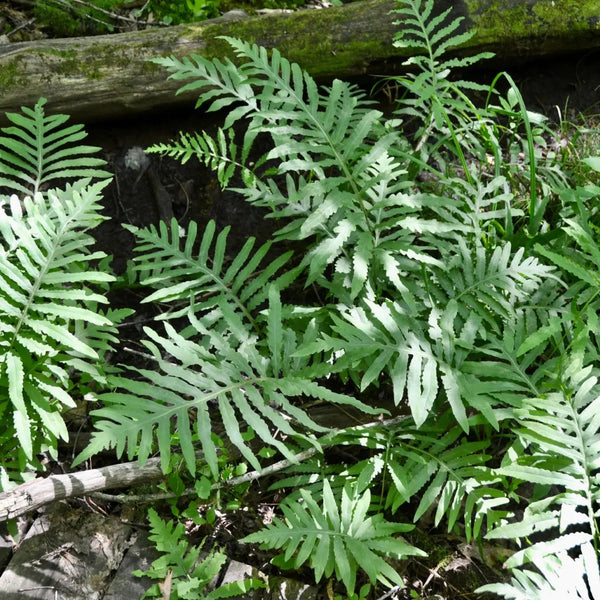
Ferns want shade and soil that holds moisture, so any partner must want the same. Check your spot a day or two after rain. Soil that still feels wet suits sensitive fern. Soil that is damp but not soggy suits New York fern. Loose, dark soil full of rotted leaves suits maidenhair fern. Then choose a partner from the matching step below.
Tip: Dig a small hole and squeeze a handful of soil to feel how wet it stays.
2. Moist shade: sensitive fern and foam flower
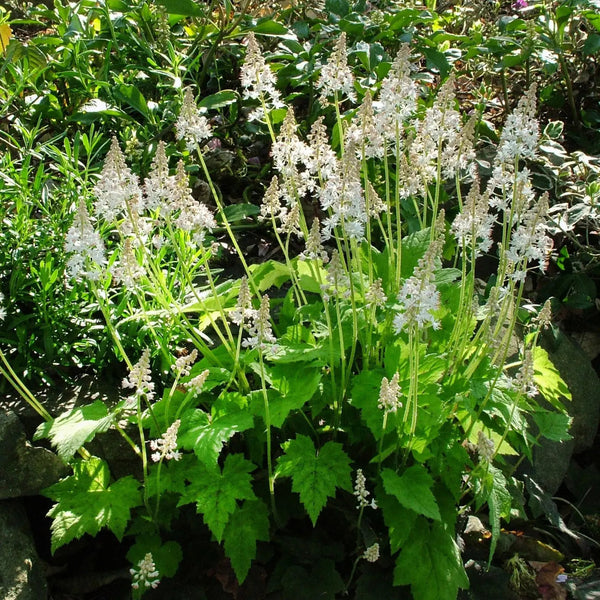
Sensitive fern grows well in moist soil, in shade or part sun. Foam flower likes the same moist soil and partial shade. It forms a ground cover, 6 to 12 inches wide, with white or soft pink blooms. Plant it along the front of the bed. The fern's shiny, dark green fronds then rise behind a carpet of small flowers.
Tip: Mulch sensitive fern before winter to protect it from cold.
3. Average shade: New York fern and wild ginger
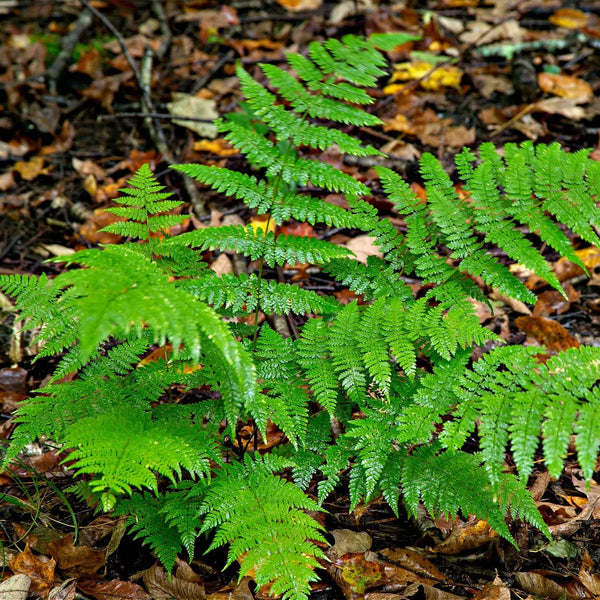
New York fern grows 1 to 2 feet tall in shade or part shade. It spreads by rhizomes, which are creeping underground stems, and forms colonies. Wild ginger can hold its ground beside it. It grows 4 to 12 inches tall and forms dense colonies of glossy, heart-shaped leaves. It likes moist, loamy, slightly acidic soil and resists deer.
Tip: Its small brown spring flowers hide under the leaves, so plant it for foliage.

4. Rich woodland: maidenhair fern and Solomon's seal
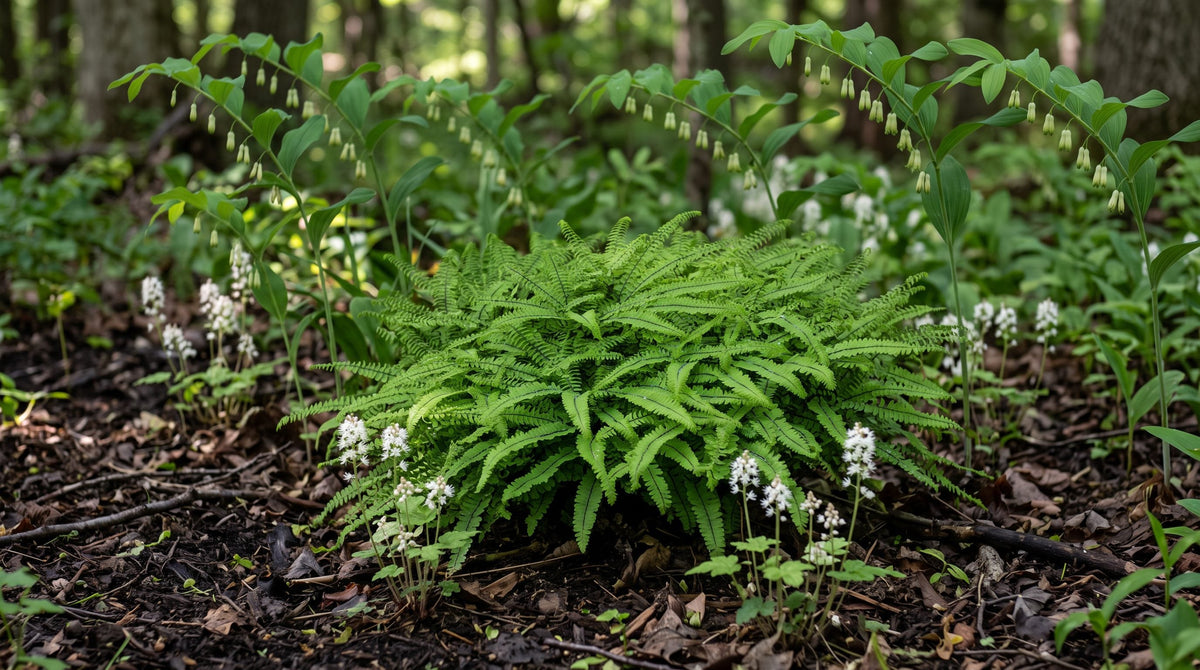
Maidenhair fern carries fan-shaped fronds on thin black stems, 1 to 3 feet tall. It wants acidic, humus-rich soil, meaning soil full of rotted leaves, in dappled or deep shade. Solomon's seal shares that shade. Its arching stems hang pairs of small, bell-shaped white flowers with a lily-like scent. The upright arches give height behind the fern's soft fans.
Tip: Solomon's seal is deer resistant, which helps along woodland edges.

5. Space the bed in layers
Set maidenhair fern crowns about two feet apart. Use each partner's mature spread for the rest. Foam flower and wild ginger spread 6 to 12 inches, so plant them about a foot apart along the front. Great white trillium spreads 12 to 18 inches. Put taller plants, like Solomon's seal, at the back, ferns in the middle and ground covers in front.
Tip: Loosen the bed and mix in leaf mold or compost before planting.
Spring ephemerals before the fronds
Ferns unfurl their fronds in spring, and until they fill out, the ground between crowns can look bare. Fill that gap with spring ephemerals. These are woodland wildflowers that come up, bloom and set seed in a few weeks, early in the year. Virginia bluebells are a classic choice. Their pink buds open to light blue trumpets in nodding clusters, on plants 18 to 24 inches high. They bloom from March to May, and each plant flowers for about three weeks. Great white trillium adds snowy, three-petaled flowers above a whorl of three leaves. It reaches 12 to 15 inches tall and grows in zones 3 to 9. Tuck both between fern crowns rather than in front of them. As the bluebells fade, the opening fronds cover the space they leave. The result is a bed that flowers in spring and stays green and full through summer, with no bare patches between seasons.


Care and keeping
Water a new fern bed well after planting and keep it evenly moist through the first season while roots settle. Leave fallen leaves in place each fall. They break down into the leafy soil ferns and woodland wildflowers prefer, and they shelter crowns in winter. Hold off on heavy fertilizer; a layer of leaf mold does the job.
Frequently asked questions
What flowers plant well with ferns?
Shade-loving woodland flowers plant well with ferns. Foam flower gives white or soft pink blooms at the front of a moist bed. Solomon's seal hangs small white bells from arching stems. For early color, Virginia bluebells and great white trillium bloom in spring before the fronds fill in.
What native plants pair with ferns?
Native woodland plants pair best with ferns. Wild ginger, a native perennial, forms dense colonies under New York fern in average shade. Virginia bluebells and great white trillium, both native to eastern North America, bloom between fern crowns in spring. Pair them with native maidenhair fern in rich, leafy soil.
What to plant between ferns in a shady spot?
Low ground covers and spring wildflowers fit between ferns best. Wild ginger and foam flower spread 6 to 12 inches, so plant them about a foot apart. Tuck Virginia bluebells or trillium between fern crowns too. They bloom early, and the fronds cover the gap once their flowers fade.