
The short answer
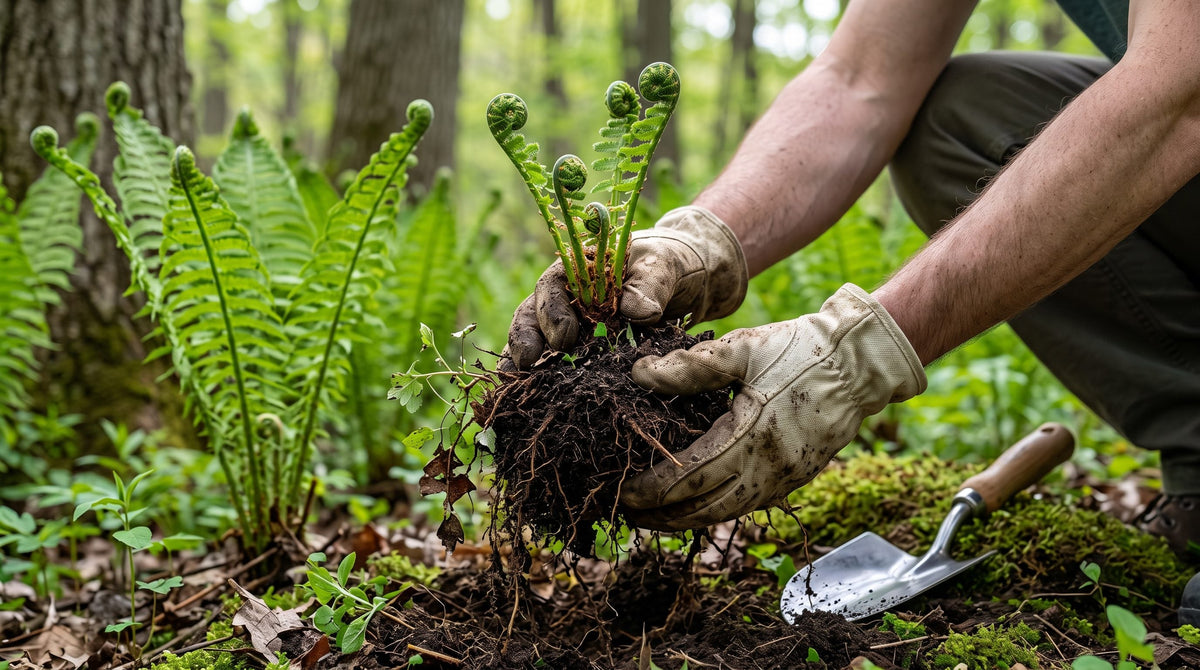
Transplant ferns in early spring, as new fronds start to show, or in late summer to early fall once heat eases. Dig a wide root ball, keep the soil around the roots, and replant at the same depth in moist, compost-rich soil in shade. Set bare-root crowns level with the soil surface, then water deeply.
Ferns are some of the most forgiving perennials to move, and learning how to transplant ferns comes down to working with their season and keeping their roots from drying out. Whether you are lifting an overgrown clump, splitting one patch into several, or planting fresh crowns that arrived bare-root, the job rests on the same few things: timing, a generous root ball, the right depth and steady moisture. Ask Extension's expert answer on moving ferns is clear: ferns transplant like most perennials, best in spring, with late summer as a second window. We ship our native ferns freshly dug and bare-root, so this guide covers both jobs, from dividing an established clump to setting dormant crowns at the right depth. You will also see how ostrich fern and lady fern are best moved, since the two grow and spread differently. Browse our full range of fern plants to fill the bed.
How to transplant ferns: what you need


1. Pick the right season
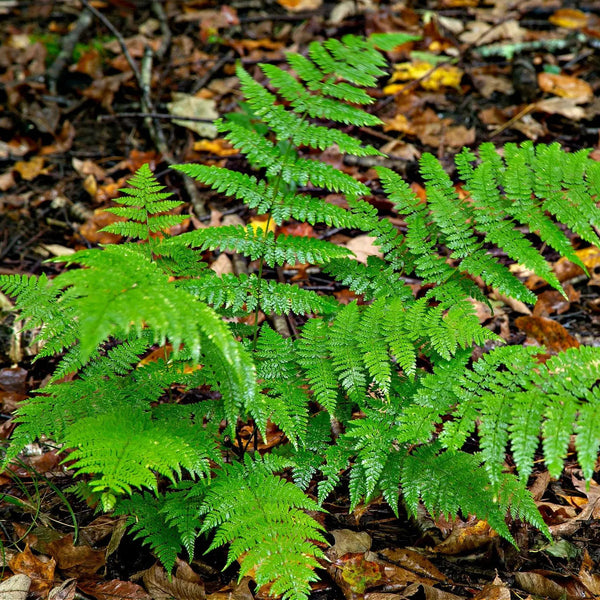
Move ferns while the weather is cool. Early spring, as the first fiddleheads push through the soil, is the best window, because the plant has a full season ahead to root in. Late summer into early fall is the second choice, once the heat breaks and rain returns. Skip the hot middle of summer, when fronds lose water faster than disturbed roots can replace it. Water the clump well the day before you dig.
Tip: Mark the clump with a stake in fall so you can find it before spring fronds appear.
2. Dig a wide root ball
Push your spade straight down in a circle a few inches outside the base of the fronds, so you cut around the roots rather than through them. Fern roots tend to spread sideways rather than deep, so work the blade under the clump and lever it up with the soil still attached. Slide it onto a tarp or into a wheelbarrow and keep it shaded and damp until it goes back in the ground.
3. Divide a large clump into sections
An overgrown clump can become several new plants. Set it on the ground and look for the separate crowns, the points where fronds rise from the roots. Cut between them with a sharp spade or an old bread knife, keeping a good fist of roots with each crown. Ostrich fern also spreads by rhizomes, so you can sever a young offset from the edge of a colony and move it on its own.
Tip: Replant divisions the same day, because exposed roots dry out quickly.
4. Set bare-root crowns at soil level
We ship our ferns dormant and bare-root, with no soil around the roots. Soak the roots in water for one to two hours before planting. Dig a hole wide enough for the roots to spread out, then set the crown level with the soil surface, not buried beneath it. Backfill with native soil mixed with compost and firm it gently to remove air pockets. A dug clump goes in at the same depth it grew before.
Tip: Plant bare-root ferns within a few days of arrival.

5. Water deeply, then mulch
Soak the planting hole right after you firm the soil, until water stands for a moment before draining. Spread a layer of shredded leaves or bark mulch around the plant, keeping it off the crown, to hold moisture and keep the roots cool. Through the first season, keep the soil moist but never soggy. Skip heavy fertilizer in the first weeks and let compost feed the roots.
Tip: Limp fronds after a move are common; new fronds follow once roots settle.
Ostrich fern and lady fern after a move
Ostrich fern (Matteuccia struthiopteris) spreads by rhizomes into colonies, so the easiest way to move it is to cut a young offset from the edge of a patch rather than lift the whole stand. Mature plants reach 3 to 6 feet tall and 3 to 5 feet wide, so space transplants with that spread in mind and let the gaps fill over time. Set them where the soil stays moist and fertile, in partial to full shade, such as a streambank, pond edge or damp woodland bed. Lady fern (Athyrium filix-femina) grows as a clump that returns each spring from the previous year's rootstock, so lift it whole and split it between crowns, as in step three. It reaches 2 to 3 feet tall, spreads 3 to 7 feet and grows fast, so divisions bulk up quickly. Both are deciduous: a fall transplant looks bare until spring, and that is normal.


Care and keeping
Check the soil every few days for the first month and water whenever the top inch feels dry. Keep mulch topped up through summer. Ostrich, lady and hay scented ferns are deciduous, so their fronds die back in winter; leave the crowns in place, and fresh fiddleheads will come up in spring.
Frequently asked questions
Do ferns prefer full sun or shade?
Most ferns prefer partial to full shade with moist soil, and ostrich fern grows best in exactly that. A few tolerate more light: hay scented fern handles full sun, which is unusual for a fern, and even grows in dry soils. Christmas fern thrives in full shade and also handles dry, well-drained soil.
How do you encourage ferns to spread?
Plant spreading species and give them the soil they like. Ostrich fern spreads by rhizomes into colonies, and hay scented fern forms a dense ground cover, spreading fastest in good, moist soil in sun. Work compost into the bed before planting, keep it moist, and mulch so the rhizomes have cool, loose soil to run through.
Will potted ferns come back every year?
Yes. Hardy native ferns are perennials, and deciduous types such as ostrich fern return each spring after dying back in winter. Roots in a pot are more exposed to cold than roots in a bed, so the surest way to bring them back is to plant potted ferns in the ground in spring or late summer.