
The short answer
North privet (Ligustrum x ibolium) is a fast, semi-evergreen hedge shrub for USDA zones 5 to 8 that can grow up to 3 feet a season and reach 10 to 15 feet. Plant bare-root stock 18 inches apart, cut it back hard at planting, and shear it often for three years. Check your state's invasive list first.
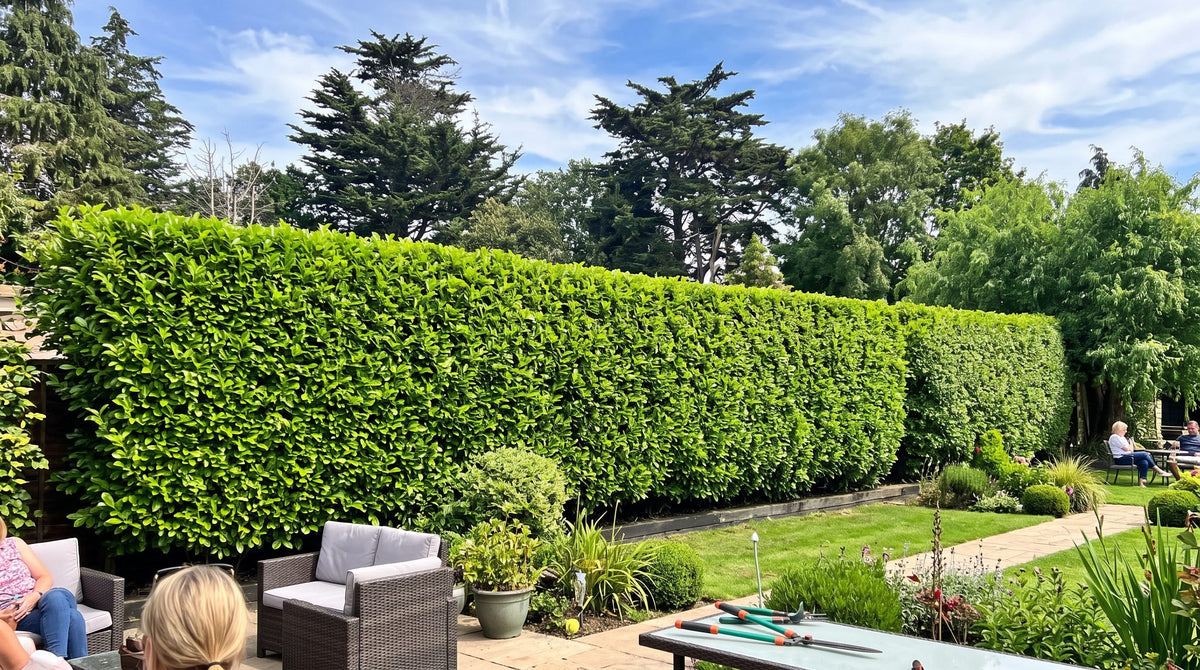
North privet is the hedge to plant when you want a solid green wall quickly. Our Northern Privet has small, dark green leaves, fragrant white flowers in tight clusters in late spring and early summer, and small black fruit afterward. It is semi-evergreen, and its foliage may turn yellow in fall. It grows in clay, loam or sandy soil, in full sun to partial shade, and it handles drought, pollution and city conditions once settled. Our Ibolium Privet listing offers Ibolium, Wax Leaf and Northern types, and California Privet is a separate species that grows to about 8 feet. Privet's toughness is also its catch. It spreads by seed when birds eat the berries, and several states list privet species as invasive. This guide covers the part that decides whether a hedge fills in evenly: how many bundles to buy for your row, how to plant bare-root stock, and how to shear it through the first three years so it stays thick at the base.
What you need for North privet
1. Measure the row and count your bundles
Space North privet 18 inches apart on center in a single row. At that spacing, a bundle of 25 covers about 36 feet, 50 covers about 73 feet and 100 covers about 148 feet. For a thicker screen, plant a double row: two lines 18 inches apart, with plants staggered in a zigzag. A double row needs twice the plants, so a bundle of 25 covers about 18 feet.
Tip: Order a few extra plants to fill any gaps after the first season.
2. Plant bare-root privet in a trench
Dig a trench along your string line instead of single holes; it is faster and keeps the row straight. Make it deep and wide enough that the roots spread out without bending. Set each plant at the depth it grew in the field, backfill with the soil you removed, and firm it around the roots. Water the whole trench slowly until the soil is soaked.
Tip: Soak bare roots in a bucket of water for a few hours before planting.
3. Cut back hard right after planting
This step decides how full the bottom of the hedge gets. Right after planting, cut every stem back to about 6 inches above the ground. It feels drastic, but privet answers a hard cut by branching low, and those low branches are what make a hedge dense at the base. Skip it, and you get tall stems with leaves mostly at the top.
Tip: Use sharp hedge shears or loppers so the cuts are clean.
4. Shear through the first three years
In the first summer, once new shoots reach about a foot, cut them back by half. In years two and three, shear two or three times each growing season, taking off about half of the new growth each time and letting the hedge gain height slowly. Keep the base slightly wider than the top so sunlight reaches the lower branches.
Tip: Once the hedge reaches the height you want, shear it back to that line each time.
5. Shear after bloom to cut down on berries
Our Northern Privet flowers in late spring to early summer, then sets small black fruit. Birds eat that fruit and carry the seed, which is how privet escapes a yard. Shearing soon after flowering keeps the hedge tidy and removes many of the spent flower clusters before they ripen into berries. A regularly sheared hedge sets less fruit than one left to grow loose.
Tip: Don't compost clippings that carry berries; bag them instead.
Where privet is listed invasive
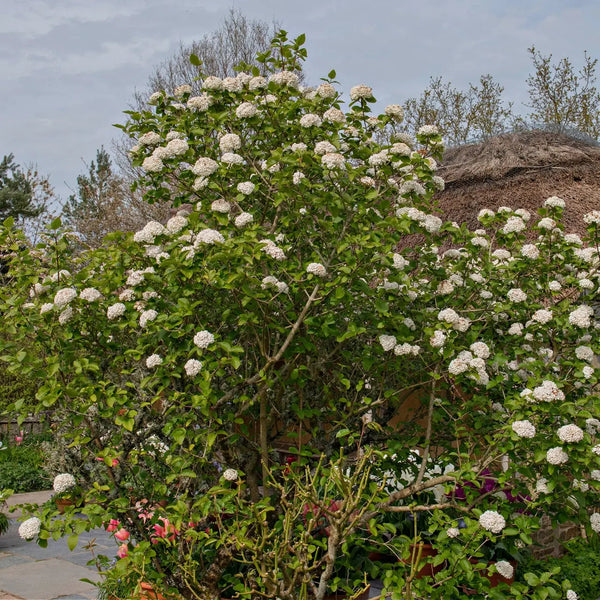
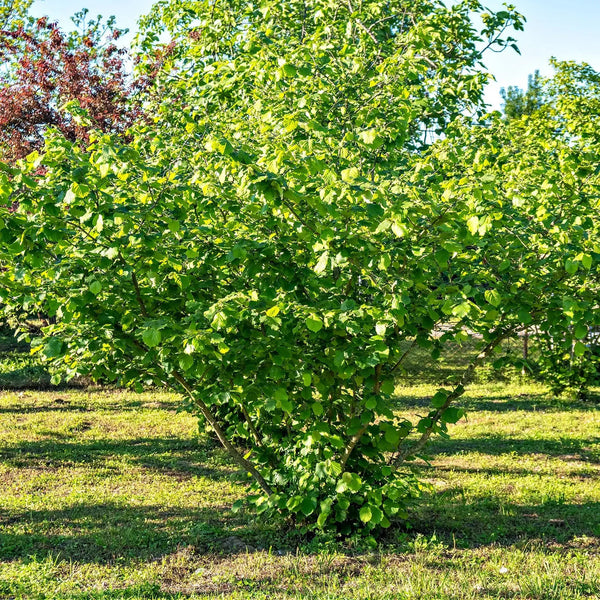
Privet is not a problem plant everywhere, but it is in some places, and you should know before you plant. In New Jersey, Rutgers names border privet (Ligustrum obtusifolium) and European privet (Ligustrum vulgare) as widespread invaders that form thickets, shade out young native trees and spread by bird-carried seed and root sprouts. In Florida, UF/IFAS lists Chinese privet on the state's Noxious Weed List and as a Category 1 invasive. These listings name particular species, not North privet, but North privet also sets berries that birds eat. Before you order, check your state's invasive plant list or ask your county extension office. If privet is listed where you are, or your hedge borders woods, a stream or open land, choose a native shrub instead. Arrowwood Viburnum reaches 6 to 15 feet with white spring flowers and berries birds use for food. American Hazelnut is a native with a rounded shape, warm fall color and nuts that feed birds and native mammals.
Care and keeping
Water during dry spells in spring, summer and early fall, especially in the first season. Feed in early spring and again in fall with a 15-5-10 fertilizer at about 0.7 pounds per 100 square feet, spread at the base. Watch for whiteflies and mites, and cut out dead wood when you shear.
Frequently asked questions
What are the negatives of privet hedge?
Privet needs shearing several times a year to stay neat, and a hedge left unsheared grows tall and open at the base. Birds eat its berries and spread the seed into nearby woodland, and some states list privet species as invasive. In those places, a native hedge is the better choice.
Are Ligustrum and privet the same?
Yes. Ligustrum is the botanical genus, and privet is its common name. The genus belongs to the olive family and holds around 50 species. North privet is Ligustrum x ibolium, a hybrid, while California privet is Ligustrum ovalifolium. The species differ in hardiness, leaf hold and how freely they spread, so check the full name.
Is privet good or bad?
It depends on where you plant it. As a sheared hedge, privet is tough, fast and tolerant of clay or sandy soil, drought and city conditions. Where it is listed invasive, or next to woodland, its bird-spread seed makes it a poor neighbor. Check your state's list, keep it sheared, and choose a native where privet is listed.