
The short answer
Arborvitae range from dwarf globes 1.5 to 2 feet tall to giants of 30 to 60 feet. Most fall into three classes: dwarf and globe types under 3 feet, narrow columns of 8 to 20 feet, and tall screens of 30 feet or more. Space hedges 2 to 5 feet apart for columns and 5 to 8 feet for giants.
An arborvitae size chart is only useful if it tells you what the plant will do in your yard, not just how tall it ends up. Height and width decide where a variety fits, but two more numbers decide whether a hedge works: how far apart to plant each tree, and how many years it takes to screen a view. The chart at the end of this guide lists both for every common size class, from dwarf globes to Green Giant. It also gives growth rate, hardiness zones, and notes on deer and winter color. Work through the steps below first. They explain each size class, show how width sets your spacing, and help you estimate how long a row will take to close. If you are planting dozens or hundreds of trees for a project, getting these numbers right before you order saves both money and a second season of replanting.
Arborvitae size chart: plants we grow
1. Dwarf and globe arborvitae
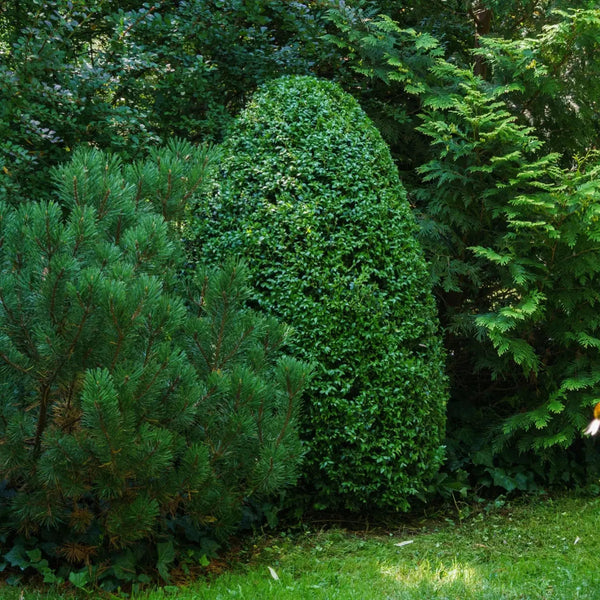
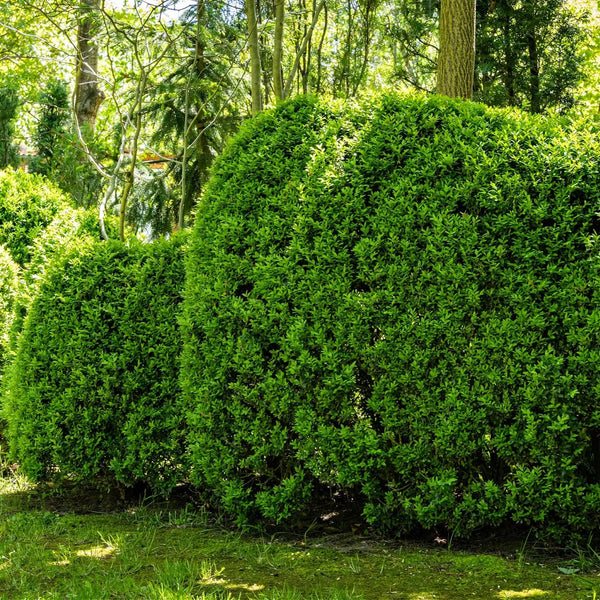
Dwarf arborvitae are the smallest size class. Globe types such as Anna's Magic Ball stay about 1.5 to 2 feet tall and wide and grow slowly, so they hold their shape in a foundation bed or along a walk for years. Other dwarf forms reach 2 to 3 feet tall and 3 to 4 feet wide. Choose them to frame a space, not to hide a view.
Tip: For a low evergreen edge, Wintergreen Boxwood fills the same role.
2. Narrow columns for tight spaces
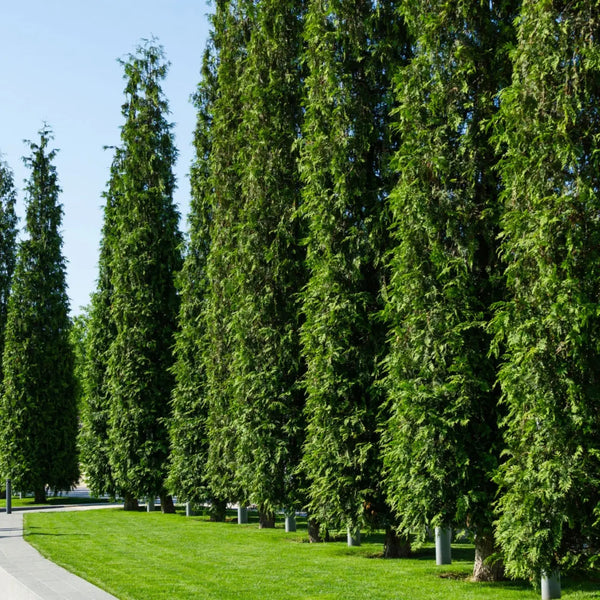
Narrow columns are the arborvitae most people picture. Emerald Green grows 10 to 15 feet tall and only 3 to 4 feet wide. Tall Guy reaches 8 to 12 feet tall and 2 to 3 feet wide. Faster columns such as American Pillar reach 15 to 20 feet and 3 to 5 feet wide. All of them suit side yards, fence lines and beds close to the house, where a wide tree would crowd the space.
Tip: Emerald Green holds its winter color well, but deer browse it often.
3. Tall privacy screens for long property lines
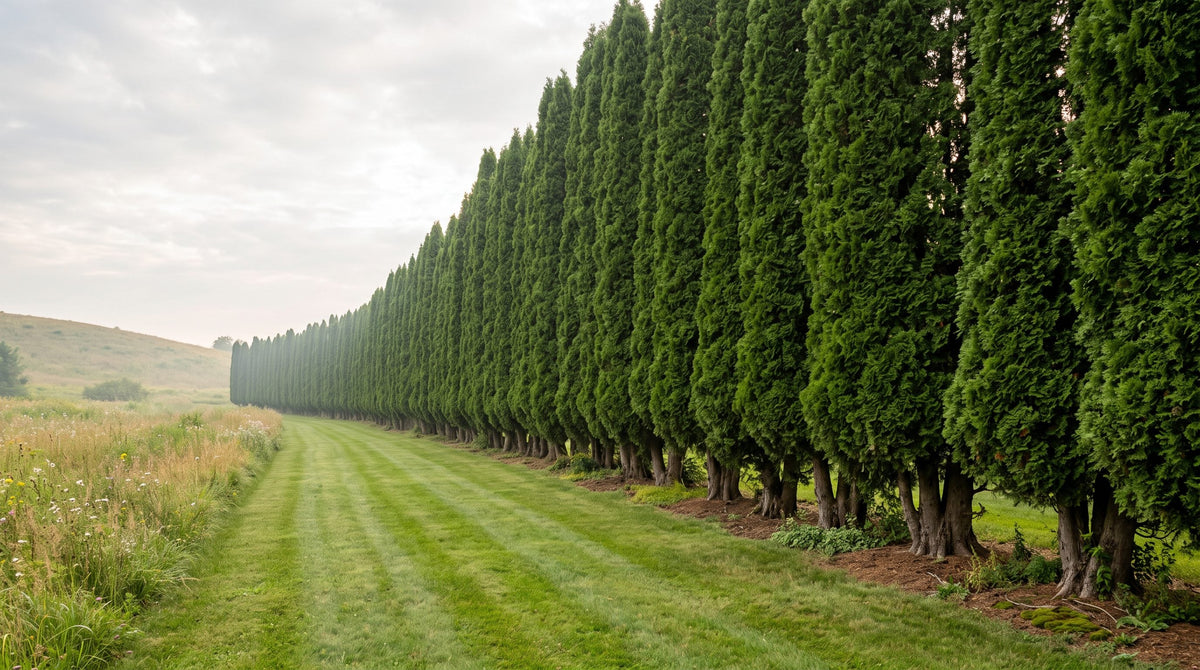
The tallest class needs open ground on both sides of the row. Green Giant, a hybrid of Thuja standishii and Thuja plicata, reaches 30 to 60 feet tall and 12 to 20 feet wide, and it is among the fastest arborvitae you can plant. American arborvitae reaches 40 to 60 feet tall and 10 to 15 feet wide. Plant these along property lines, open acreage and views that need blocking at second-story height.
Tip: Green Giant resists deer browsing well, though it can bronze a little in harsh winters.
4. Set hedge spacing from mature width
Measure spacing from trunk center to trunk center. For narrow columns, plant about as far apart as the mature width, so neighbors touch as they fill out: Emerald Green 3 to 4 feet, Tall Guy 2 to 3 feet. Giants go in closer than their spread, because the row is meant to knit into one wall: Green Giant 5 to 6 feet for a dense screen, or up to 8 feet if you can wait.
Tip: To count trees, divide the row length by the spacing, round down and add one.
5. Estimate the years to a full screen
Growth rate sets the wait. Slow growers such as Emerald Green add about 6 to 12 inches a year, so a 1 to 2 foot plant can take 4 to 10 years to make a 6-foot screen. Green Giant adds 2 to 5 feet a year once its roots settle, so the same plant can reach 6 feet in roughly 2 to 4 seasons. Full sun and steady water in the early years help either one keep its pace.
Privet as a faster sheared hedge
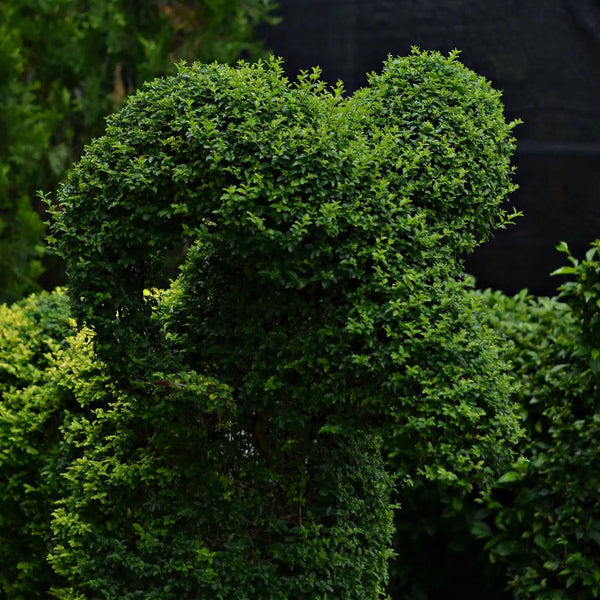
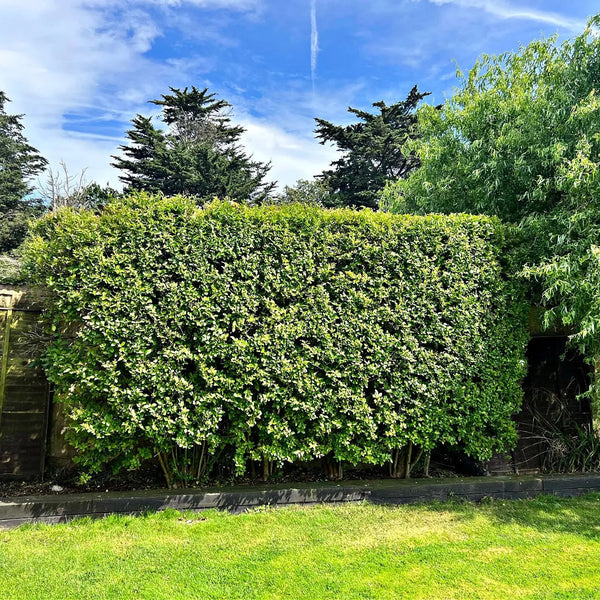
Privet is the fast alternative when a narrow arborvitae column is more than a site needs or more than a budget allows. Because privet is sheared rather than left to grow, you set its size yourself: hold it at 4 to 6 feet along a walk, or let it climb to screen a patio. California Privet grows quickly, reaches up to about 8 feet, and does best in sun with well-drained soil. That makes it a strong screen beside a busy street or a high-traffic edge of the yard, though its quick growth means more maintenance than many hedge plants. Northern Privet grows taller, to roughly 10 to 15 feet, for a screen closer to column height. Plant both in a single row, measure spacing trunk center to trunk center, and shear the young plants to thicken their base before letting them gain height. Where you want an evergreen edge instead, Green Mountain Boxwood suits foundations and borders and handles drought once settled.
Care and keeping
Trim arborvitae lightly in late spring or early summer and take only the green tips. Older bare wood rarely pushes new growth, so a hard cut can leave a lasting gap. Where deer visit, choose Green Giant for the main row and shield young Emerald Green with netting through its first winters.
Frequently asked questions
What are the different sizes of arborvitae?
Arborvitae come in three broad sizes. Dwarf and globe types stay under about 3 feet. Narrow columns such as Emerald Green, Tall Guy and American Pillar reach 8 to 20 feet but stay 2 to 5 feet wide. Tall screens such as Green Giant and American arborvitae reach 30 to 60 feet and spread 10 to 20 feet.
How long does it take arborvitae to reach full size?
It depends on the variety. Slow columns such as Emerald Green add about 6 to 12 inches a year, so reaching 10 to 15 feet often takes a decade or more. Green Giant adds 2 to 5 feet a year once settled, so it screens within a few seasons and keeps climbing for years after that.
Can I plant Emerald Green arborvitae 3 feet apart?
Yes. Emerald Green grows 3 to 4 feet wide, so planting 3 feet apart, trunk center to trunk center, lets neighbors touch sooner and closes the hedge faster. Go to 4 feet if you would rather buy fewer plants and can wait longer for the gaps to fill. A 100-foot row at 3 feet needs 34 plants.
Arborvitae size chart
| Variety | Mature height | Mature width | Growth rate | USDA zones | Hedge spacing | Time to a 6-ft screen | Notes |
|---|---|---|---|---|---|---|---|
| Anna's Magic Ball (dwarf globe) | 1.5–2 ft | 1.5–2 ft | Slow | 3–8 | 1.5–2 ft | Stays below 6 ft | Low edging, not a screen |
| Tall Guy | 8–12 ft | 2–3 ft | Moderate | 4–8 | 2–3 ft | Several years (moderate grower) | Very narrow column |
| Emerald Green | 10–15 ft | 3–4 ft | 6–12 in a year | 3–8 | 3–4 ft | 4–10 years | Holds winter color; deer browse it often |
| American Pillar | 15–20 ft | 3–5 ft | Very fast | 3–8 | 3–5 ft | Quicker than Emerald Green | Tall, narrow screen |
| American arborvitae | 40–60 ft | 10–15 ft | Medium to fast | 3–7 | 5–8 ft | Quicker than Emerald Green | Needs open ground |
| Green Giant | 30–60 ft | 12–20 ft | 2–5 ft a year | 5–9 | 5–6 ft (up to 8) | About 2–4 seasons | Resists deer; can bronze in harsh winters |
Mature height
- Anna's Magic Ball (dwarf globe)
- 1.5–2 ft
- Tall Guy
- 8–12 ft
- Emerald Green
- 10–15 ft
- American Pillar
- 15–20 ft
- American arborvitae
- 40–60 ft
- Green Giant
- 30–60 ft
Mature width
- Anna's Magic Ball (dwarf globe)
- 1.5–2 ft
- Tall Guy
- 2–3 ft
- Emerald Green
- 3–4 ft
- American Pillar
- 3–5 ft
- American arborvitae
- 10–15 ft
- Green Giant
- 12–20 ft
Growth rate
- Anna's Magic Ball (dwarf globe)
- Slow
- Tall Guy
- Moderate
- Emerald Green
- 6–12 in a year
- American Pillar
- Very fast
- American arborvitae
- Medium to fast
- Green Giant
- 2–5 ft a year
USDA zones
- Anna's Magic Ball (dwarf globe)
- 3–8
- Tall Guy
- 4–8
- Emerald Green
- 3–8
- American Pillar
- 3–8
- American arborvitae
- 3–7
- Green Giant
- 5–9
Hedge spacing
- Anna's Magic Ball (dwarf globe)
- 1.5–2 ft
- Tall Guy
- 2–3 ft
- Emerald Green
- 3–4 ft
- American Pillar
- 3–5 ft
- American arborvitae
- 5–8 ft
- Green Giant
- 5–6 ft (up to 8)
Time to a 6-ft screen
- Anna's Magic Ball (dwarf globe)
- Stays below 6 ft
- Tall Guy
- Several years (moderate grower)
- Emerald Green
- 4–10 years
- American Pillar
- Quicker than Emerald Green
- American arborvitae
- Quicker than Emerald Green
- Green Giant
- About 2–4 seasons
Notes
- Anna's Magic Ball (dwarf globe)
- Low edging, not a screen
- Tall Guy
- Very narrow column
- Emerald Green
- Holds winter color; deer browse it often
- American Pillar
- Tall, narrow screen
- American arborvitae
- Needs open ground
- Green Giant
- Resists deer; can bronze in harsh winters
Times assume a 1 to 2 foot plant. Browse our Evergreen Conifers collection.