The short answer
Choosing pin oak vs red oak comes down to drainage and soil pH. Plant pin oak on wet, poorly drained, acidic ground: it handles soggy soil and some flooding but yellows in alkaline soil. Plant red oak on well-drained, moist to dry sites with acidic to neutral soil and room for a broad crown. Both reach 50 to 75 feet.
Pin oak vs red oak specs
| Trait | Pin oak | Red oak |
|---|---|---|
| Mature height | 50 to 70 feet | 50 to 75 feet, equally wide |
| Growth rate | Fast for an oak | Fast on well-drained soil |
| Soil moisture | Wet, poorly drained; some flooding | Moist to dry, well-drained |
| Soil pH | Acidic; yellows in alkaline soil | Acidic to neutral |
| Hardiness zones | 3 to 9 | 4 to 8 |
| Branching | Many limbs; lower ones droop | Fewer, heavier, spreading limbs |
Pin oak
- Mature height
- 50 to 70 feet
- Growth rate
- Fast for an oak
- Soil moisture
- Wet, poorly drained; some flooding
- Soil pH
- Acidic; yellows in alkaline soil
- Hardiness zones
- 3 to 9
- Branching
- Many limbs; lower ones droop
Red oak
- Mature height
- 50 to 75 feet, equally wide
- Growth rate
- Fast on well-drained soil
- Soil moisture
- Moist to dry, well-drained
- Soil pH
- Acidic to neutral
- Hardiness zones
- 4 to 8
- Branching
- Fewer, heavier, spreading limbs
Choose pin oak if
- Your site stays wet, drains poorly or floods now and then during the year.
- Your soil tests acidic and you want a quick-growing oak for low ground.
- You are planting streets, parks or lawns and can raise the drooping lower limbs.
Choose red oak if
- Your ground drains well and dries out between rains, even on slopes or upland sites.
- Your soil runs closer to neutral, where pin oak is more likely to turn yellow.
- You have room for a broad crown that spreads about as wide as it grows tall.
Soil and site
Drainage decides most of this matchup. Pin oak prefers medium to wet, acidic loam and handles poorly drained soil and some flooding, which makes it a strong pick for low spots, swales, pond edges and bottomland plantings. Red oak wants moist to dry, well-drained sandy or loamy soil and copes with drought once established, so it belongs on slopes, ridges and upland ground. Soil pH is the second test. Pin oak is prone to leaf chlorosis and branch dieback in high pH soils: the leaves turn yellow and the tree weakens season after season. Red oak accepts a wider range, from acidic to neutral. Test your soil before you order: near neutral favors red oak, and strongly alkaline ground calls for a different tree.
Growth and form
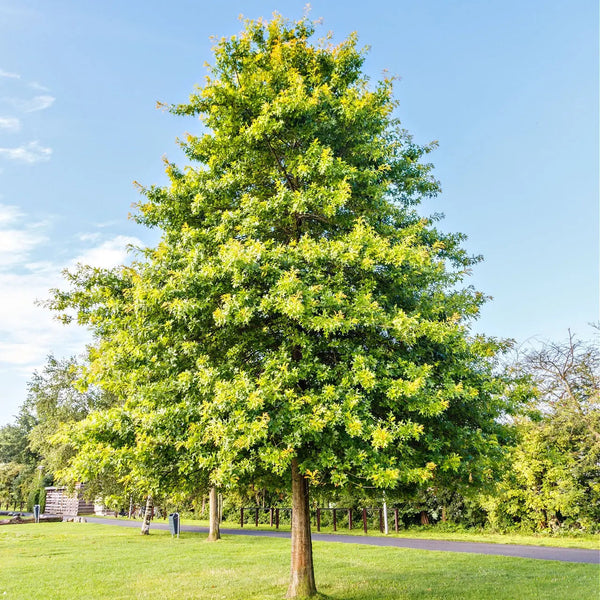
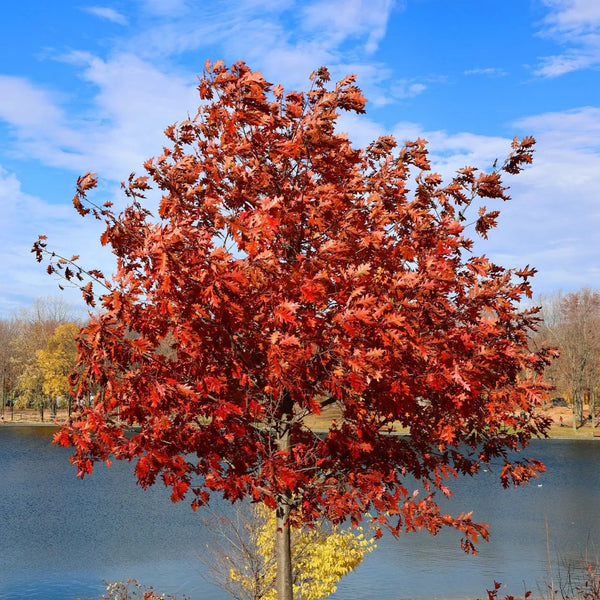
Both trees grow quickly for oaks. Pin oak is one of the faster-growing red-group oaks, especially on moist, acidic soil, and red oak keeps pace on the well-drained ground it prefers. Expect pin oak at 50 to 70 feet and red oak at 50 to 75 feet with a spread about as wide as it is tall. Their shapes differ more than their speed. Pin oak starts pyramidal and rounds out with age, with many side branches: the lower ones droop, the middle ones reach straight out and the top ones climb. Plan to limb it up over walks, drives and streets. Red oak grows fewer, heavier limbs that rise or spread wide and sheds its lower branches as it grows, so give it open space rather than pruning.
Our verdict
For wet, acidic ground, plant pin oak. For well-drained soil, upland sites or soil near neutral, plant red oak. Pin oak suits zones 3 to 9 and red oak zones 4 to 8, and both feed wildlife with their acorns. A soil test settles most close calls.
Frequently asked questions
- What are the disadvantages of pin oak trees?
Pin oak turns yellow from chlorosis in alkaline soil, and its branches can die back as the tree weakens. Its drooping lower limbs need pruning over walks, drives and streets, and young trees hold their dry brown leaves through winter, which some owners dislike in a lawn.
- Why is red oak less desirable?
Red oak is only less desirable on the wrong site. It wants well-drained ground, so it is a poor choice for low, wet spots where pin oak thrives. Its crown spreads about as wide as it grows tall, which crowds small yards, and its large acorns drop on lawns, walks and drives.
How to tell pin oak and red oak apart
Both are red-group oaks, so their leaves end in bristle tips and their acorns take two seasons to ripen. Four clues separate them in the field:
- Leaves: pin oak leaves are deeply cut, with narrow lobes and wide, rounded gaps. Red oak leaves have broader lobes and shallower gaps.
- Acorns: pin oak acorns are small and nearly round. Red oak acorns are much larger, with a flat, shallow cap.
- Branches: pin oak holds many thin limbs, and the lower ones droop toward the ground. Red oak sheds its lower limbs as it grows, leaving a clean trunk.
- Winter look: young pin oaks often keep their dry brown leaves into winter, which makes them easy to spot in a bare stand.
Pin oak and red oak seedlings for bulk plantings
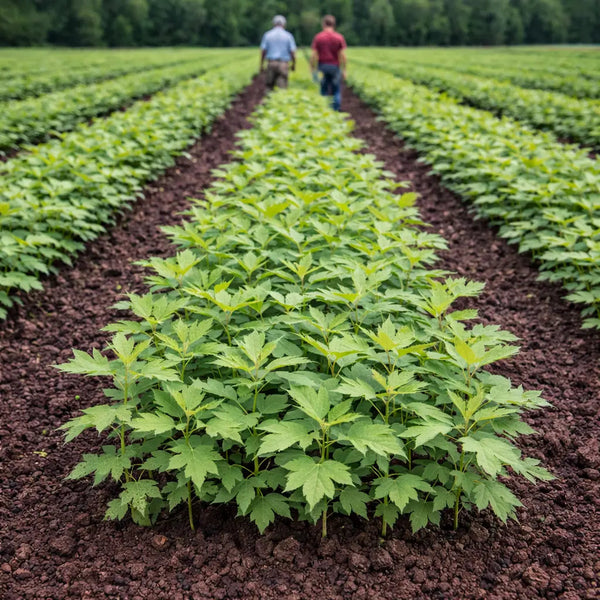
For restoration work, buffers, windbreaks and large lots, bare-root seedlings are the most cost-efficient way to plant either oak. Match the species to the ground first: pin oak seedlings in the low, wet, acidic parts of a site and red oak seedlings on the higher, better-drained parts. On mixed sites, planting both lets each tree take the ground it suits. Browse our full trees collection for larger stock and other natives.