

The short answer
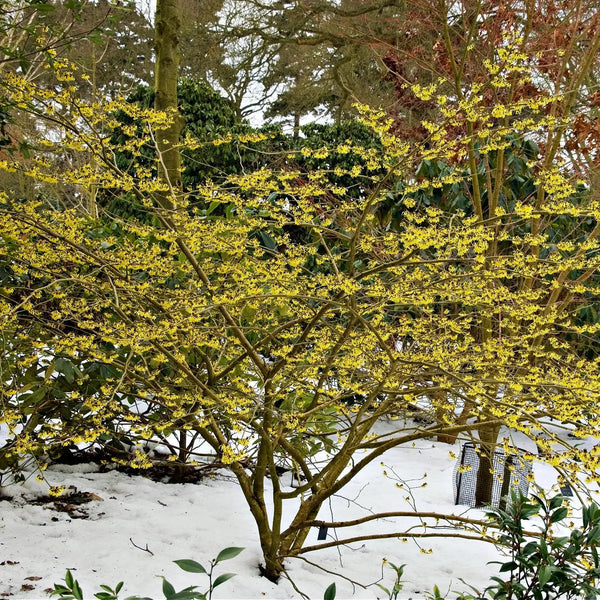
The witch hazel shrub (Hamamelis virginiana) is a native shrub or small tree, 12 to 20 feet tall and wide, hardy in zones 3 to 9. It opens fragrant yellow flowers in late fall. Plant it in sun or part shade and moist soil, 6 feet apart for a screen or 10 to 12 feet for one shrub.
Common witch hazel grows wild along woodland edges and forest borders. In the garden it fills the same role. It softens the line between a lawn and the woods, screens a fence or road, and holds soil on a slope with its deep roots. Its big draw is timing. The ribbon-like yellow flowers open in late fall, often after the leaves have turned gold and dropped, when little else is in bloom. Late-season bees visit them for nectar. The shrub asks for little once it settles in. It does best in full sun to part shade and moist, well-drained, slightly acidic soil, though it adapts to less ideal ground. It also needs a short spell of cool winter weather, which is harder to find in the warmest corners of its range. Below are five steps to plant and space it, a hedgerow mix, and a spacing table you can take to the site.
Plants for a witch hazel shrub screen
1. Pick a spot with sun and moist soil
Choose a place with full sun to part shade. More sun means more flowers, and too much shade can leave the shrub thin and leggy. Moist, well-drained, slightly acidic soil suits it best. Avoid spots that stay soggy after rain or bake dry all summer. Give it room: a mature witch hazel shrub can spread as wide as it is tall, up to about 20 feet.
Tip: Keep it well back from paths so the branches can arch out freely.
2. Space shrubs for a screen, hedge or specimen
Measure spacing from the center of one plant to the center of the next. For a dense screen, set shrubs about 6 feet apart so branches meet and knit together. For a looser, natural screen, use about 8 feet. For single shrubs that show their full shape, allow 10 to 12 feet. Plant in a staggered double row when you want the screen to close faster.
Tip: The spacing table at the end of this guide sums up each option.
3. Plant bare-root shrubs while they are dormant
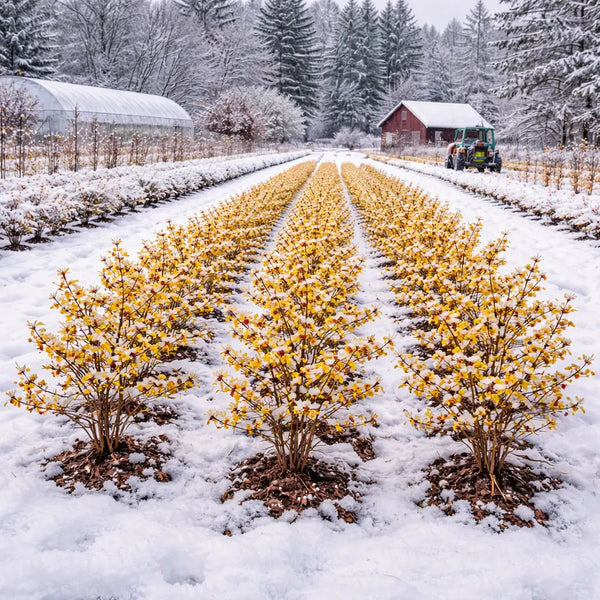
Bare-root shrubs ship without soil, so plant them while they are leafless, from late fall to early spring when the ground is workable. Soak the roots in water for a few hours first. Dig a hole wider than the root spread and just as deep. Set the plant at the depth it grew before, spread the roots, refill with native soil, and firm it gently.
Tip: Keep roots damp and out of the sun until the moment they go in the ground.
4. Water steadily through the first seasons
Water right after planting to settle the soil around the roots. Through the first growing season, water deeply whenever the top of the soil feels dry and rain is short. A layer of mulch keeps the soil cool and moist, but keep it a few inches off the stems. Once the shrub is settled, it needs extra water only in long dry spells.
5. Prune lightly after the flowers fade
Witch hazel needs little pruning. If you want to shape it or keep it smaller, prune once the flowers are finished, before new growth takes off. Remove dead, crossing or rubbing branches first. Cut suckers at the base if you want a tidy shrub, or leave them for a fuller thicket in a screen. Avoid shearing it into a tight box shape.
Tip: A natural, open shape shows off the flowers best.
Mixing witch hazel into a native hedgerow
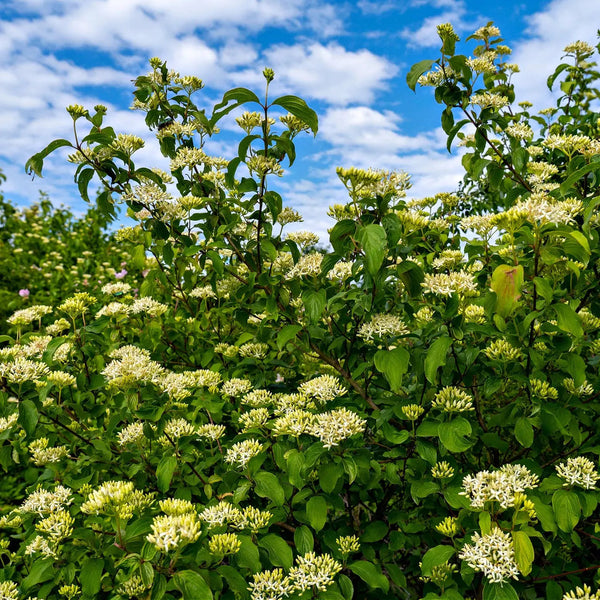
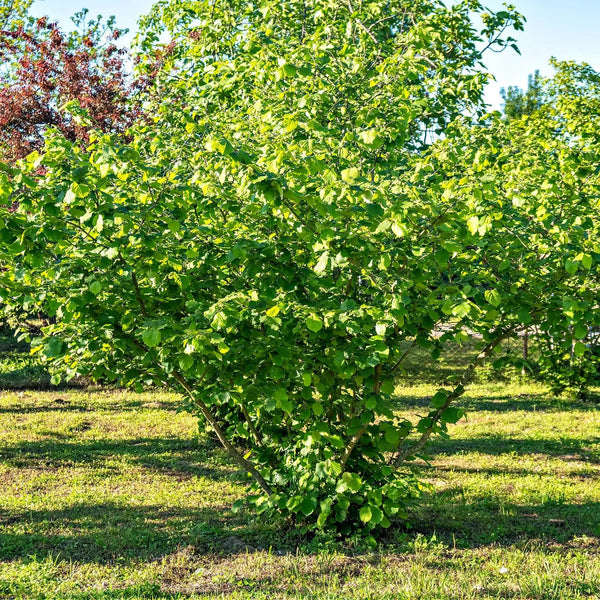
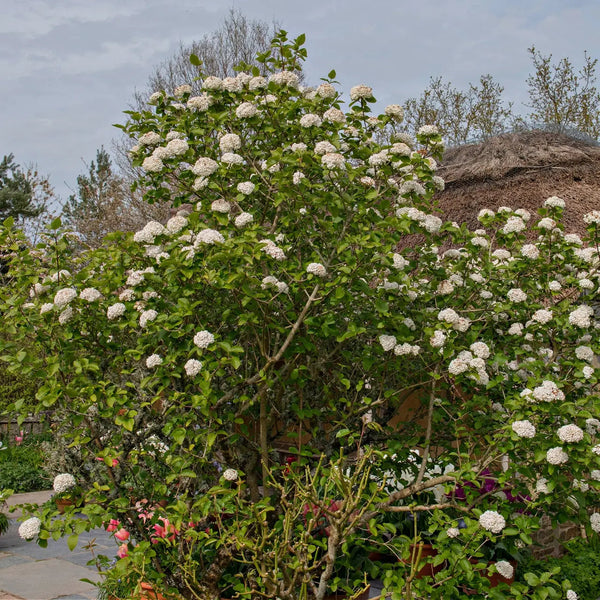
A screen of witch hazel alone works well, but a mixed hedgerow gives you more to look at through the year. It also spreads the risk if one plant struggles on your site. Put witch hazel toward the back and set lower shrubs in front. Repeat each plant in small groups of three or five rather than dotting single plants along the line. That keeps the hedge looking planned, not random. American hazelnut and arrowwood viburnum are two plants from our shrub range that fit this kind of planting. Both come bare-root in bundles of 25 plants and up, in sizes from 1 to 4 feet, so one order can cover a whole hedgerow. Check that each plant suits your hardiness zone before you order. Then lay out the full line with stakes or flags so you can see the spacing before you dig a single hole.
Care and keeping
Here is what to expect from a young bare-root plant. Years one and two: most growth goes into roots, so the top looks slow. From year three: roughly 6 inches to 2 feet of new growth a year, more in sun and steady moisture. At about six years of age: the first fall flowers.
Frequently asked questions
Is witch hazel a tree or shrub?
Both, depending on how it grows. Common witch hazel is naturally a large, multi-stemmed shrub. Left alone it can reach about 20 feet tall and wide, and with pruning to one or a few trunks it takes the form of a small tree. Most gardeners grow it as a shrub for screens and woodland edges.
How quickly does witch hazel grow?
It grows at a slow to moderate pace. Once settled, most plants add about 6 inches to 2 feet a year, with the faster end in sun and steady moisture. The first year after planting is usually slower while roots establish. Heavy shade and dry soil slow it down.
Do deer eat witch hazel trees?
Deer tend to leave witch hazel alone. It is known for resisting deer browsing, which makes it a good choice for rural and woodland-edge sites. No shrub is fully deer-proof, though. Hungry deer in a hard winter may nibble young plants, so protect new plantings with tree tubes or fencing for the first few years.
Witch hazel shrub spacing at a glance
Use these figures when you lay out a planting. They assume common witch hazel at its full size. The NC State Extension plant profile has more on its size and habit.
| Planting goal | Spacing (center to center) | What to expect |
|---|---|---|
| Dense screen or hedge | About 6 feet | Branches meet and form a solid green wall as plants mature |
| Loose, natural screen | About 8 feet | Each shrub keeps more of its own shape; gaps close more slowly |
| Single shrub or specimen | 10 to 12 feet | Each shrub shows its own shape for years; at full size the outer branches may touch |
Spacing (center to center)
- Dense screen or hedge
- About 6 feet
- Loose, natural screen
- About 8 feet
- Single shrub or specimen
- 10 to 12 feet
What to expect
- Dense screen or hedge
- Branches meet and form a solid green wall as plants mature
- Loose, natural screen
- Each shrub keeps more of its own shape; gaps close more slowly
- Single shrub or specimen
- Each shrub shows its own shape for years; at full size the outer branches may touch