
The short answer
Red twig dogwood care is simple: plant it in full sun to part shade in moist or even wet soil, keep new plants damp through their first summer, and each early spring cut about a third of the oldest stems to the ground. Young stems carry the brightest red, so that one cut keeps winter color strong.
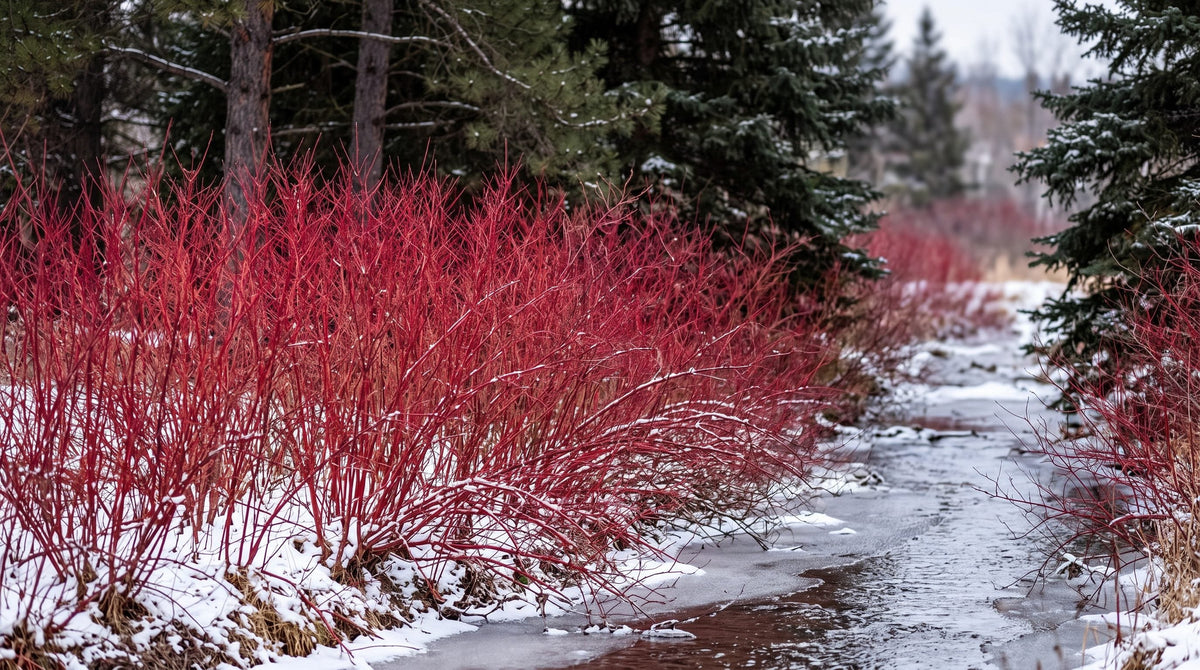
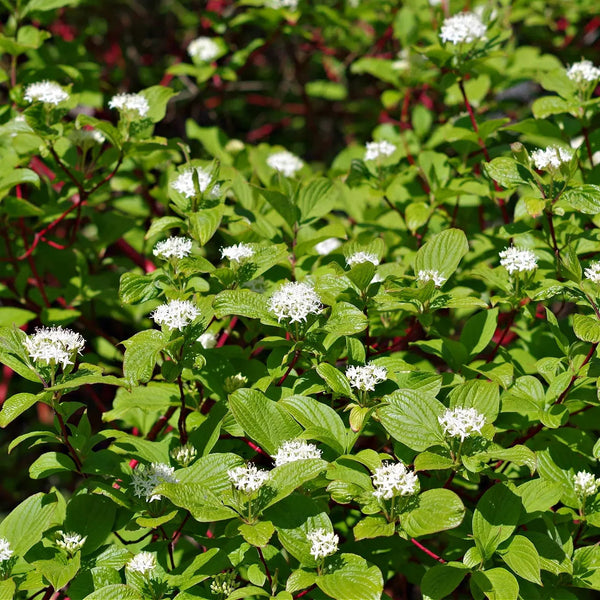
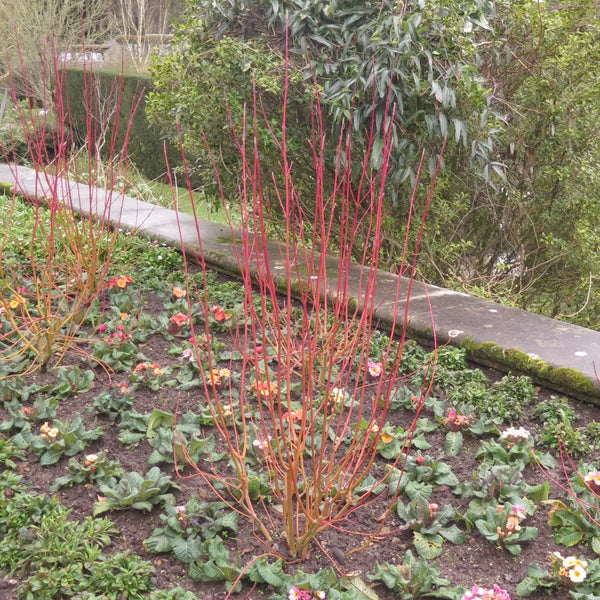
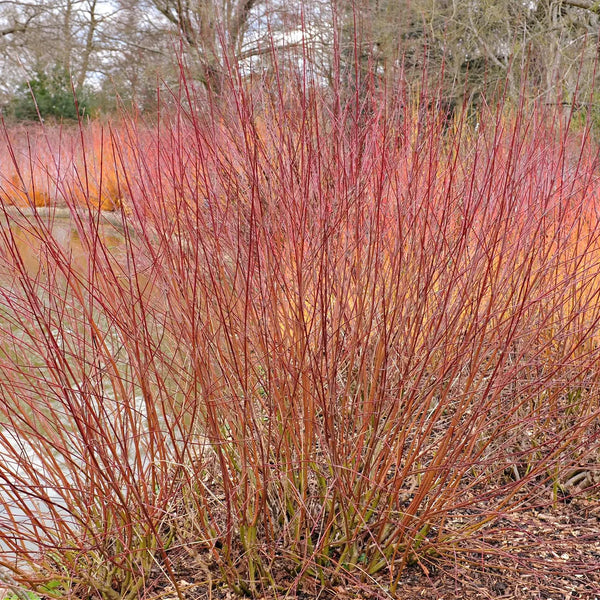
Red twig dogwood, also sold as red osier dogwood (Cornus sericea), is a native shrub grown for its bare red stems. After the leaves drop, those stems glow against snow, an evergreen hedge or a brown winter field. It is also one of the hardest-working shrubs for low, soggy ground. It stands in wet soil, spreads by underground stems into a thicket, and its cuttings root easily. That makes it a natural fit for stream banks, pond edges, rain gardens and long screens. Plan on a multi-stemmed shrub 5 to 13 feet tall that spreads wider with age, up to 16 feet across. In late spring it carries flat clusters of small white flowers, and birds strip the white berries by summer. The care below follows the shrub through its year: picking the site, planting bare roots, watering the first summer, pruning for color and fixing common problems. After that, you will find how to plant a whole bank from live stakes.
Red twig dogwood care: what to plant
1. Fall: pick a wet, sunny site
Choose full sun for the strongest stem color; part shade works too. Moist soil suits it best, and it tolerates wet ground, so low corners, ditches and pond edges are ideal. Our coral red dogwood is rated for zones 3 to 7, and red osier for zones 3 to 8. Give it room: it spreads by underground stems, so edge the bed or let it fill a bank.
Tip: Ten or more plants read best for winter color; a single shrub looks lonely.
2. Late fall to spring: plant bare roots
Our red twig dogwoods ship bare-root while dormant. Keep the roots damp from the moment the box opens. Soak them for an hour, then dig a hole wide enough to spread the roots out. Set each plant at the depth it grew, firm the soil, water well and mulch. For a thicket or screen, space plants 3 to 5 feet apart.
Tip: At 4 feet apart, a pack of 25 plants makes a row about 100 feet long.
3. First summer: keep the ground damp
A new shrub has few roots, so its first growing season decides whether it settles in. Keep the soil damp through that first summer, and plan on a deep watering about once a week when rain falls short. A layer of mulch holds moisture and keeps weeds from competing. Once settled, red osier dogwood handles dry spells well, and it still stands in wet ground.
Tip: Guard young plants with a tube or cage; deer and rabbits like tender new growth.
4. Late winter: prune for bright red stems
Young stems carry the brightest color, and older ones fade to dull gray-brown. Each year in late winter or early spring, before the buds open, cut about a third of the oldest, thickest stems to the ground. For an overgrown shrub, cut every stem back to 2 or 3 inches. Skip fall pruning: it removes the very stems you want to see all winter.
Tip: Never shear the top; cut whole stems at the base so the shrub stays open.
5. Any season: fix leaf spot, canker, dull stems
Leaf spots, twig blight, cankers and branches that die back are the troubles red twig dogwood meets most. Cut any dead, cracked or discolored stems at the base, below the damaged part. Thinning old stems each year also opens the shrub to air and light. Dull, faded stems usually mean the shrub missed its yearly cut. If most stems are dull, cut the whole shrub back to 2 or 3 inches in late winter.
Planting banks and rain gardens from live stakes
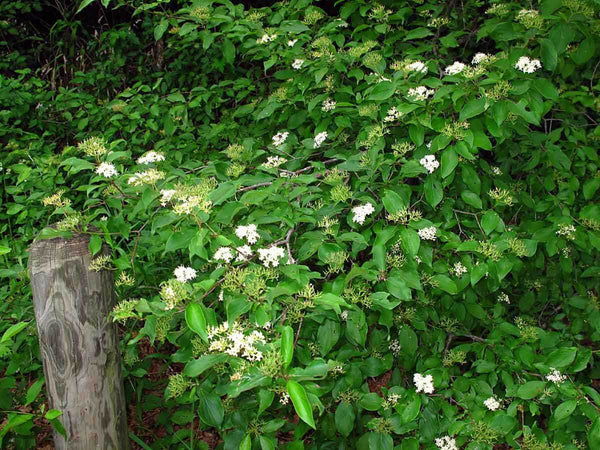
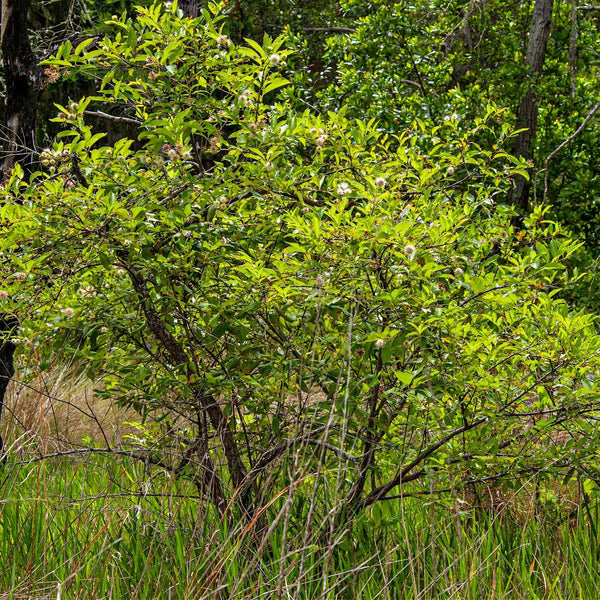
On a stream bank, pond edge or long wet ditch, live stakes are the simplest way to plant at scale. A live stake is a dormant cutting from a shrub, pushed into moist ground, where it grows roots from its buds. Red osier dogwood roots easily from cuttings, and its low stems root wherever they touch soil. Penn State Extension lists red twig dogwood as a rain garden plant. For stakes, we offer silky dogwood (Cornus amomum), a close cousin of red twig dogwood that grows on stream banks and also has bright winter stems. Plant stakes from late winter to early spring, while they are dormant. Push each one in so one or two buds sit below the surface. Space them 3 to 6 feet apart in rows, mulch around each one, and keep the soil moist through the first year. Buttonbush stakes add round white flowers, and roughleaf dogwood stakes, which prefer moist, well-drained soil, bring white spring flowers that draw bees and butterflies.
Care and keeping
A year of red twig dogwood care at a glance: plant bare roots from late fall into spring, keep them damp through the first summer, and check for leaf spot and dieback in summer. Leave the stems standing through fall and winter for color. Then, in late winter, cut a third of the oldest stems to the ground.
Frequently asked questions
Do you cut back red twig dogwood?
Yes. Cut it back every year in late winter or early spring, before the buds open. Remove about a third of the oldest stems at ground level so young, bright red shoots replace them. An overgrown shrub can be cut back to 2 or 3 inches from the base all at once.
How much sun do red twig dogwoods need?
Red twig dogwood grows in full sun to part shade. Full sun gives the strongest stem color in winter, so give it the sunniest wet spot you have. Part shade works too, so a bank shaded for part of the day is still a good home. Keep the soil moist in either case.
Do red twig dogwood bushes bloom?
Yes. In late spring, red twig dogwood opens flat clusters of small white flowers. Pollinators visit them, and white to bluish-white berries follow in summer, which birds eat quickly. The flowers are pleasant but modest; the shrub is grown mainly for its red winter stems.