

The short answer
Hardy hibiscus is a cold-hardy perennial hibiscus, mostly rose mallow and its native marsh cousins. Plant it in spring in full sun and soil that stays moist: wet spots, pond edges and rain gardens suit it best. For dry, well-drained beds, choose a woody Rose of Sharon instead. It sprouts late each spring, so be patient.
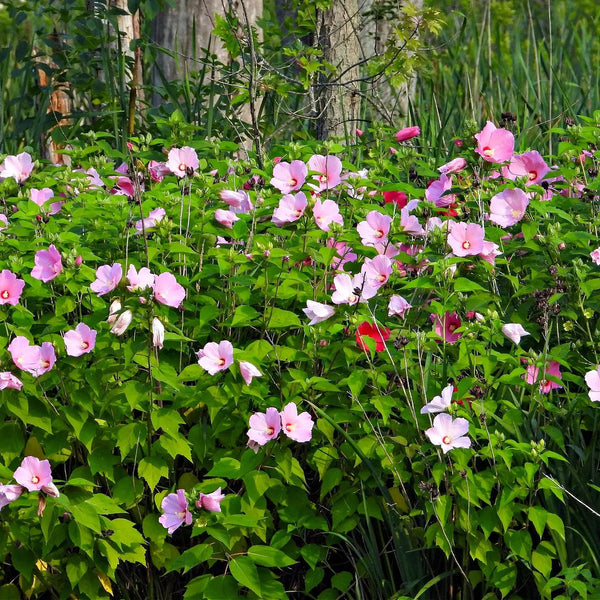
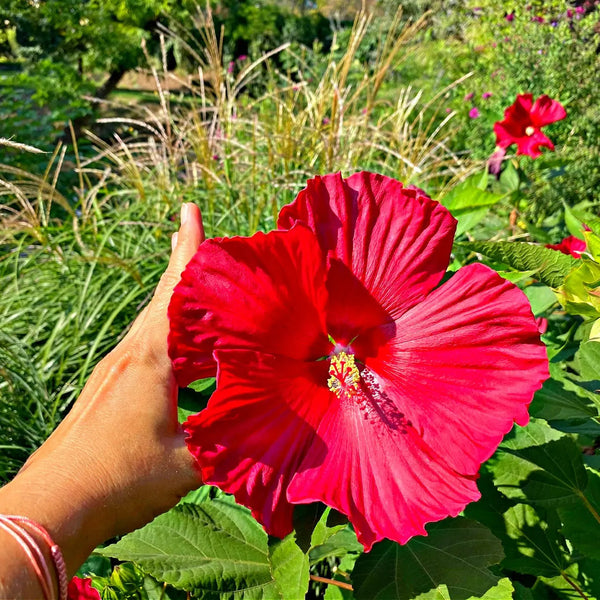
Hardy hibiscus gives you tropical-looking blooms without a tropical climate. The best-known kind is Hibiscus moscheutos, often called rose mallow or swamp rose mallow. It is native to wetlands and riverbanks of the Eastern and Central United States. Its flowers can reach 10 inches across, in red, pink and white. Unlike tropical hibiscus, it dies back to the ground in winter and returns from its roots. That wet-ground heritage is the key to growing it well. Most garden trouble comes from planting it where the soil dries out. Put it in a low spot, along a pond edge or in a rain garden. There it can thrive with little help. A rain garden is a shallow bed that catches runoff from a roof or driveway. This guide covers which hardy hibiscus to plant where, when to plant it, and how to get through its slow start each spring. Clemson's Home & Garden Information Center offers a full hardy hibiscus care sheet.
What you need for hardy hibiscus

1. Pick a sunny, wet spot
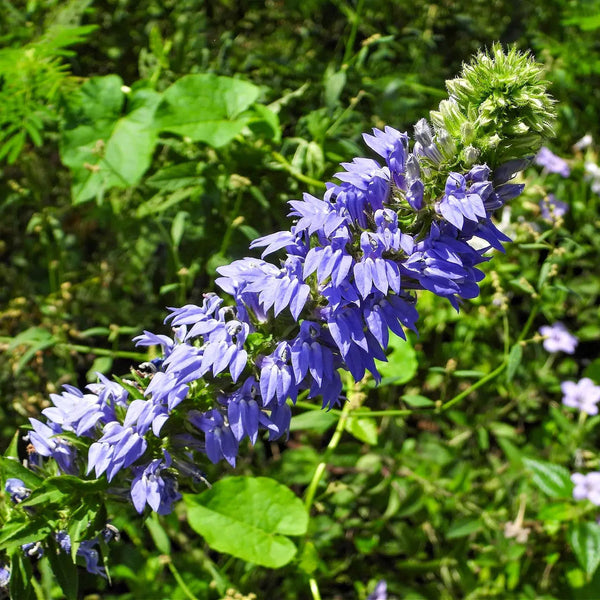
Choose a site with full sun and soil that stays moist. Low corners, ditch edges, pond banks and rain gardens all suit hardy hibiscus. Our Marsh Hibiscus Plant is ideal for wet spots and adds height to pond edges. In a rain garden, set it in the low, wettest part of the bed. Pair it with Blue Flag Iris and Blue Lobelia for a mix of shapes and colors. Full sun gives you the most blooms.
Tip: Watch where puddles sit after rain. That is often your best planting spot.
2. Plant in spring once the soil warms
Spring is the best time to plant hardy hibiscus. Wait until the danger of frost has passed and the soil feels workable. Dig a hole wider than the roots and set the crown level with the soil. The crown is where the stems meet the roots. Firm the soil gently and water well to settle it. Space plants a few feet apart so they have room to fill out.
Tip: Work compost into the hole. Hardy hibiscus likes rich, moist soil.
3. Water deeply through the first season
Hardy hibiscus is a wetland plant, and it does not like drying out. Water deeply during its first growing season, especially in summer heat. Spread a few inches of mulch around the base to hold in moisture, keeping it off the stems. Once the deep roots are set, plants handle short dry spells better. In a rain garden, storm runoff does much of the watering for you.
Tip: Push a finger into the soil. If the top inch is dry, water.
4. Wait out the late spring start
Hardy hibiscus is one of the last perennials to wake up. Shoots often do not show until late spring, after other plants are well up. Do not dig it up or give up on it. Mark its spot in fall so you do not plant over it. Cut the old dead stems down to a few inches in late winter or early spring, before new growth starts.
Tip: A stake or plant label stops you digging into the crown by mistake.
For drier ground, choose Rose of Sharon
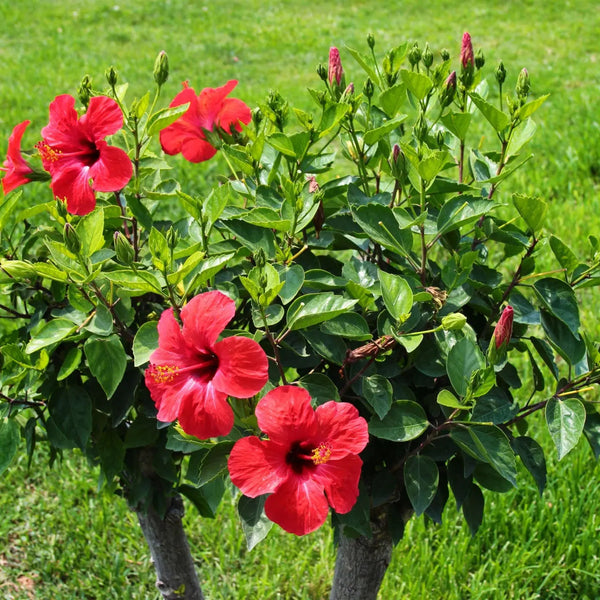
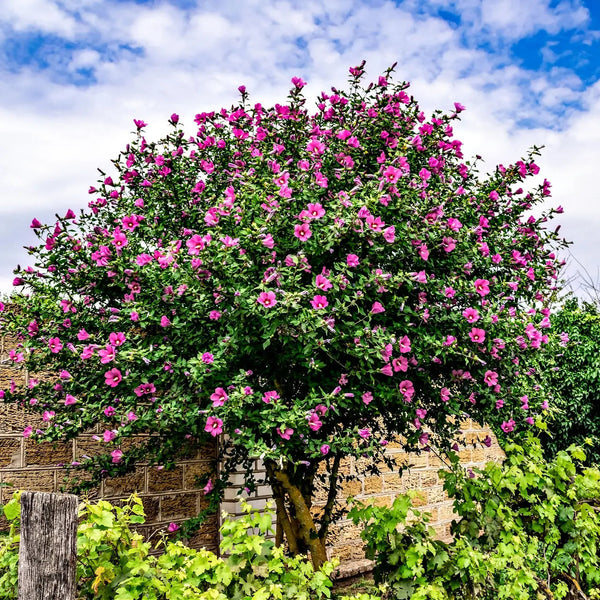
Not every yard has a wet spot. For dry or well-drained ground, a woody shrub hibiscus is the better pick. Our Red Hibiscus is Hibiscus syriacus, also known as Rose of Sharon or althea. It is an Asian species, not a native, but it is well adapted to mid-range USDA zones. Unlike rose mallow, it keeps a woody frame above ground all winter. It can reach about twelve feet tall and eight feet wide. It tolerates clay, sand and rocky soil, but it prefers a spot that drains quickly. Once settled, it handles dry spells and bounces back. Scarlet flowers open by midsummer and can carry on into fall in warm climates. Each bloom lasts about a day, with a new one right behind. The Pink Hibiscus Shrub brings rose-pink flowers to the same kind of sunny, well-drained site. Plant these where rose mallow would struggle, and save the wet ground for the native marsh kinds.
Care and keeping
Keep hardy hibiscus moist all summer, above all in its first year. Cut old stems back in late winter or early spring, before new shoots appear. Feed the soil with compost rather than heavy fertilizer. Watch for Japanese beetles and aphids on the leaves in summer, and pick beetles off by hand.
Frequently asked questions
When should I plant my hardy hibiscus?
Plant in spring, after the danger of frost has passed, when the soil is easy to work. This goes for potted, dormant and bare-root plants. Keep bare roots moist until they go in the ground. Do not expect shoots right away: hardy hibiscus wakes up late, often not until late spring.
How do you prune a hibiscus plant?
For hardy hibiscus, cut the dead stems down to a few inches above the ground in late winter or early spring. New stems grow from the roots each year. For woody shrub types like Rose of Sharon, trim lightly in late winter to shape the plant and remove dead wood.
What is the best fertilizer for hibiscus?
Hardy hibiscus grows best in rich, moist soil, so start by working compost into the planting hole. A layer of compost each spring feeds the soil as it breaks down. If growth looks weak, a light dose of balanced, slow-release fertilizer in spring is enough. Too much feeding can give you leaves instead of flowers.