
The short answer
Planting maple trees works best in early spring before the buds open, or in fall after the leaves drop, six to eight weeks before the ground freezes. Dig a hole two to three times wider than the roots but no deeper, set the root flare at or just above grade, backfill with native soil, water deeply and mulch.
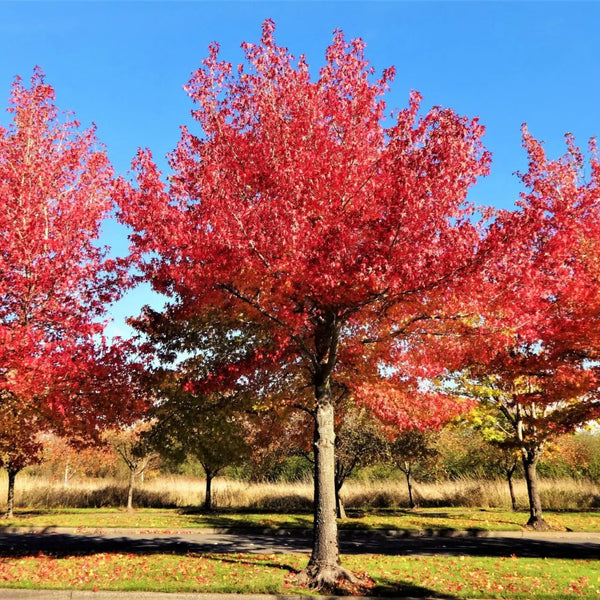
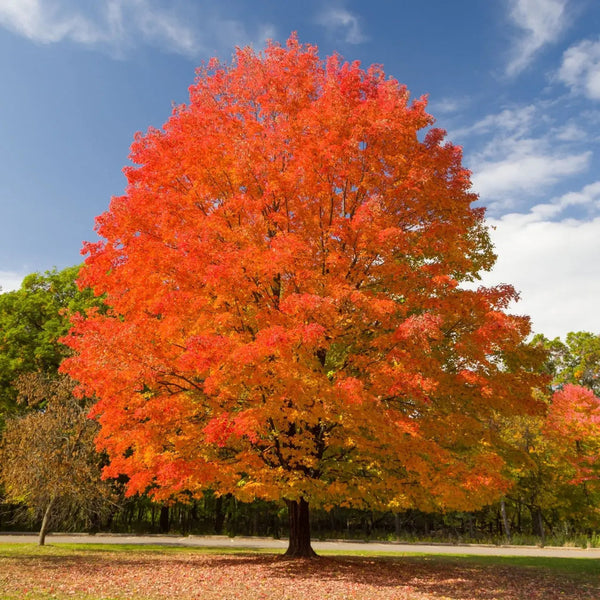
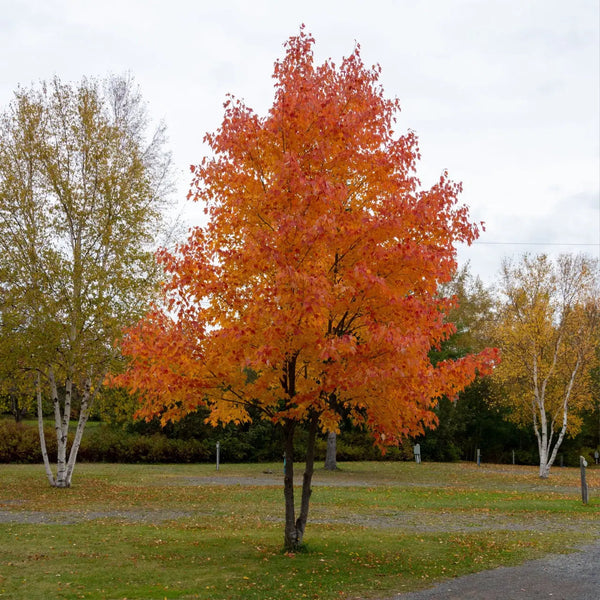
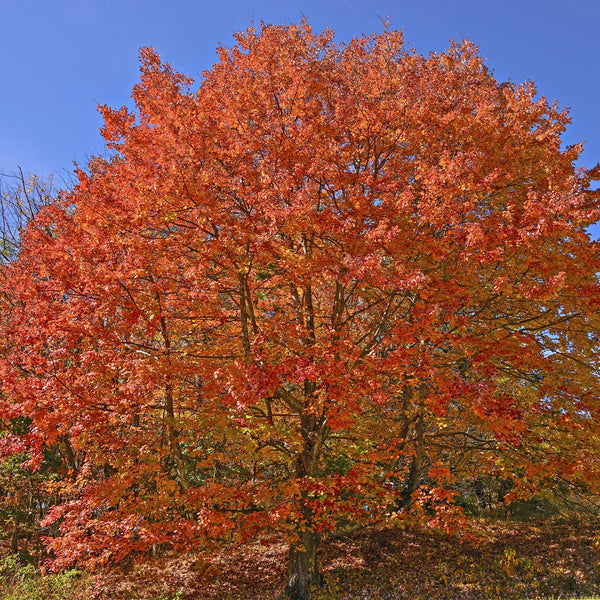
The species you choose changes how you plant a maple. Red maple handles damp ground and part shade with ease. Sugar maple wants deep, well-drained soil and rewards patience with brilliant fall color and sap for syrup. Silver maple grows fast and tolerates wet sites, but its spreading roots need more room from houses, drives and pipes. All three maples in our trees collection are listed for zones 3 to 9, so the bigger question is usually the site, not the climate. This guide walks through planting a young bare-root maple step by step: when to plant, how to match each species to its ground, how much room to leave and how deep to set the roots. It then covers what changes when you plant seedlings by the hundred for a windbreak, woodlot, sugarbush or restoration job, from handling bundles to closing each planting slit.
Planting maple trees: what you need
1. Plant while the tree is dormant
Plant in early spring before the buds break, or in fall after the leaves drop. Fall planting lets roots grow in soil that is still warm, so aim for six to eight weeks before your ground usually freezes. In warmer zones that window runs later; in the coldest zones, spring is often the safer choice. Extension advice on red maple seedlings names the same two windows.
Tip: Bare-root maples should go in the ground soon after they arrive.
2. Match the species to the site
Red maple is the most forgiving of the three: it takes damp or average soil and full sun to part shade. Sugar maple wants deep, well-drained ground and struggles in compacted or soggy spots, so save it for open lawns, woodlots and sugarbush rows. Silver maple handles wet ground and grows fast, which makes it useful in low areas and along stream edges where other shade trees sulk.
Tip: Check drainage by filling a test hole with water before you plant.
3. Give each maple room to spread
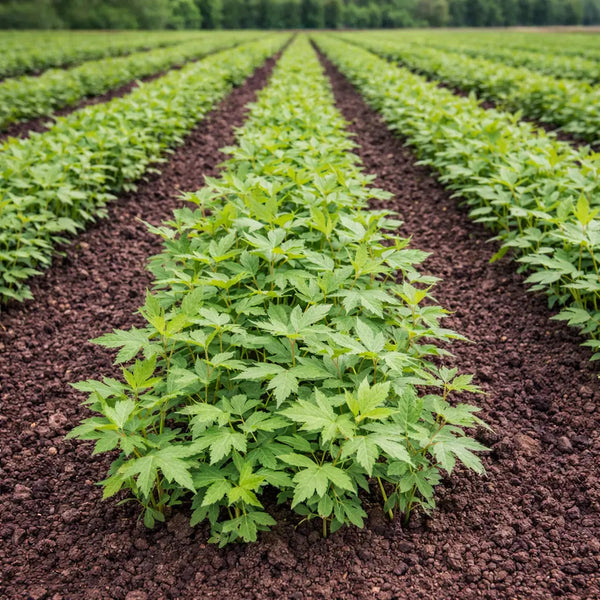
Keep large maples at least 20 feet from the house, driveways and power lines, and farther for silver maple, whose shallow, spreading roots can lift paving and find their way into sewer lines and septic fields. In a row or grove, spacing depends on the goal: plant closer for a windbreak or a woodlot you plan to thin, and wider for full-crowned shade or sap trees.
Tip: Look up before you dig: a maple's crown will outgrow the space you see today.
4. Dig wide, not deep
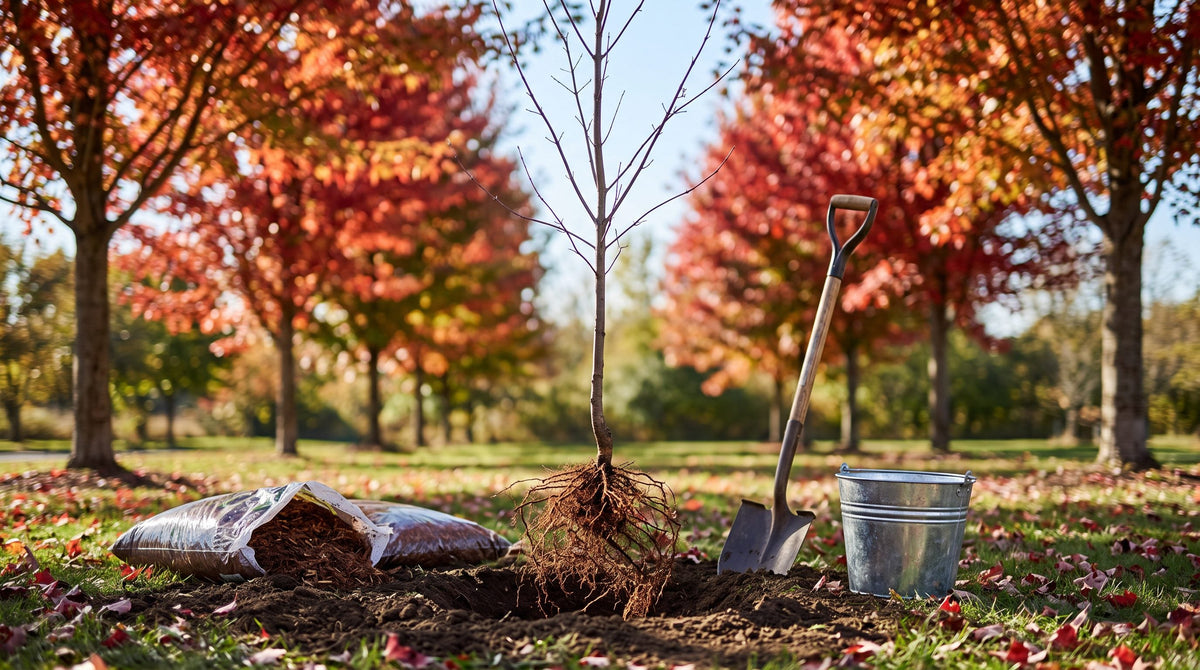
Dig a hole two to three times as wide as the root spread but no deeper than the roots reach. For a bare-root maple, soak the roots in a bucket of water while you dig, trim any broken ones, and fan the rest over a small cone of soil in the center of the hole. Set the root flare, where trunk meets roots, at or just above the surrounding grade.
Tip: Never let bare roots dry out in sun or wind while you work.
5. Backfill, water and mulch
Backfill with the soil you dug out, without heavy compost or amendments, so roots learn to grow into the native ground. Firm it gently with your hands as you go, then water slowly and deeply to settle the soil and remove air pockets. Spread two to three inches of mulch in a wide ring, pulling it back a few inches from the trunk, and skip fertilizer at planting.
Tip: If the trunk enters the ground straight like a pole, the tree is planted too deep.
Planting bare-root maple seedlings in bulk
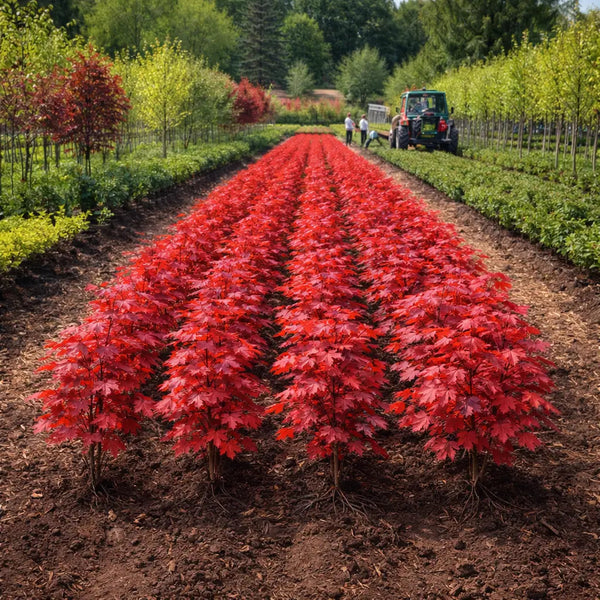
Our red, sugar and silver maple seedlings ship bare root in bundles of 100, 500 or 1,000, in 6 to 12 inch, 12 to 18 inch or mixed row-run sizes, for windbreaks, woodlots, sugarbush plantings and restoration jobs. Planting them by the hundred goes faster than planting a single tree, but the roots are smaller and less forgiving. Keep bundles cool, shaded and moist from the moment they arrive, and heel them into a trench of damp soil if you cannot plant within a day or two. Carry seedlings to the field in a bucket with wet burlap or water over the roots. Open a slit with a planting bar or spade, drop the roots straight down so they do not bend into a J, set the root collar at soil level, then close the slit with your heel. Lay out rows before you start, and plant a few extra to allow for losses and later thinning.
Care and keeping
Water deeply once a week through the first season, more in heat or drought. Keep mulch two to three inches deep and off the trunk. In seedling rows, hold back grass and weeds, which compete hard for water, and guard against deer and rabbits where they browse. Count losses after the first summer and replant gaps.
Frequently asked questions
Where not to plant a maple tree?
Avoid spots within about 20 feet of the house, driveways, sidewalks and overhead power lines, and keep silver maple well away from sewer lines and septic fields. Skip compacted, salty roadside strips for sugar maple, and low spots that stay waterlogged for anything but red or silver maple.
How far apart to plant maple trees?
It depends on what you are growing. For shade trees you want to reach full size, leave room for each mature crown so neighbors do not crowd each other. For windbreaks and woodlots you plan to thin, plant closer and remove the weaker trees as they grow. Keep every large maple at least 20 feet from buildings.
Which is the most common mistake made in tree planting?
Planting too deep. When soil covers the root flare, where the trunk widens into roots, the bark stays damp and roots can circle the trunk instead of spreading out. Dig no deeper than the roots, set the flare at or slightly above grade, and keep mulch off the trunk.