

The short answer
Lilac bush care comes down to four habits. Plant in full sun, with at least six hours of direct light, in soil that drains well. Water young shrubs through dry spells and go easy on fertilizer. Prune only in the few weeks right after the flowers fade, because next spring's buds form on this year's growth.
Lilacs are tough, long-lived shrubs, and most of the year they ask for very little. What trips people up is timing. A lilac sets next spring's flower buds on the stems it grows this year, so any cut between midsummer and bloom removes flowers. A spot that slowly turns shady, or a heavy dose of lawn fertilizer, can cost you blooms more quietly. Each season below has one or two jobs, and each one protects next year's show. Lilacs also look best with company at their feet. Wintergreen Boxwood is a slow-growing broadleaf evergreen that trims easily, so it makes a neat edging in front of a lilac hedge and stays green after the lilac drops its leaves. Spiraea Japonica is a low-maintenance shrub of four to six feet that takes full sun and adds deep rose-pink flowers in early to mid-summer, after the lilacs finish. Plant one lilac as a feature or a long row as a screen; the calendar is the same.
Lilac bush care, season by season
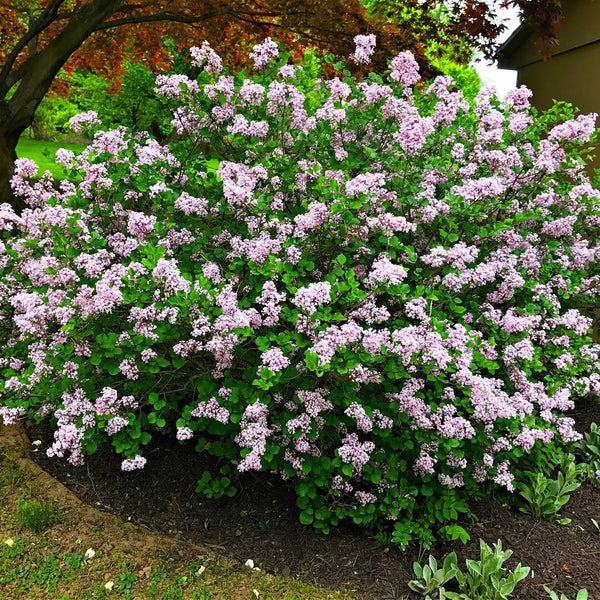


1. Fall or early spring: plant in full sun
Choose the sunniest spot you have. Lilacs need at least six hours of direct sun a day to flower well. The soil should drain freely after rain; avoid low spots where water sits. Dig a hole wider than the roots, set the shrub at the depth it grew, backfill with the same soil and water it in deeply. For a hedge or privacy screen, keep the whole row out of the shade of trees and buildings.
Tip: Mark the spot in summer, when trees are in full leaf, so you see the real shade.
2. Spring: water, mulch and feed lightly
Through the first growing season, water whenever the top few inches of soil feel dry. Established lilacs handle dry spells better, but still welcome a deep soak in a long drought. Spread mulch over the root zone, keeping it a hand's width from the stems. Go easy on fertilizer. Too much nitrogen pushes leafy growth instead of flowers, and lilacs near a heavily fed lawn often get more than enough already.
Tip: If you feed at all, use a light spring dose, never a high-nitrogen lawn food.
3. Right after bloom: deadhead and prune
This is the one pruning window in the lilac year. As soon as the flowers fade in late spring, snip off the spent clusters just above the next pair of leaves. Then shape the shrub, and on older plants cut a few of the oldest, thickest stems right down to the base. New shoots will replace them. Finish within a few weeks, before the shrub starts forming next year's buds.
Tip: Avoid cutting a whole shrub to the ground at once; hard pruning can delay flowers.
4. Summer to fall: leave the new growth alone
From midsummer on, the stems you see are carrying next spring's flower buds. Put the pruners away, even if a branch looks a little long. Keep watering young shrubs during long dry spells. Pull weeds and grass back from the base, and top up mulch as it breaks down. Fall is also a good time to plant new lilacs while the soil is still warm.
5. Winter: let the shrub rest
Lilacs are cold-hardy, and our Lilac Shrub is listed for zones 3 to 9. In winter there is little to do. Skip pruning, because every cut on healthy wood removes flower buds. After heavy snow, brush it gently off the branches so stems do not split. If a stem does break, cut it back cleanly below the damage and leave the rest for spring.
Shrubs that bloom after your lilacs
Lilacs give you a short, bold burst of color in spring. To keep a border flowering once they finish, pair them with shrubs that open later. Red Weigela blooms from late spring to mid-summer, with five-lobed flowers that draw hummingbirds. It likes moist, well-drained soil, takes pruning well and suits partial sun, so it can sit at the shadier end of a lilac row. Smooth Hydrangea carries big white clusters from May into July, with scattered flowers into September. It does best in part shade and is hardy in zones 3 to 9. One difference matters for your calendar. Smooth hydrangea blooms on new wood, so you can cut it back hard in late winter and still get flowers. Lilacs bloom on last year's wood, so they wait until after spring flowering. Label your plants by pruning time and you will never cut the wrong shrub in the wrong month.


Care and keeping
The one rule worth remembering: prune lilacs only in the weeks right after they flower. Cuts made in fall, winter or early spring remove next year's buds. If your lilac leafed out but did not bloom, think back to when it was last trimmed before you change its feeding or watering.
Frequently asked questions
Do lilac trees need pruning?
Yes, but lightly and at the right time. Deadhead spent flowers and shape the shrub right after it blooms. On older lilacs, remove a few of the oldest stems at the base each year to keep new, free-flowering wood coming. Skip pruning in fall, winter and early spring.
What can I feed lilacs to make them bloom?
Usually nothing extra. Lilacs bloom best with little fertilizer, and too much nitrogen gives you leaves instead of flowers. If growth is weak, a light spring feeding is enough. Keep high-nitrogen lawn fertilizer away from the root zone, and focus on full sun and correct pruning instead.
How long does it take for a new lilac bush to bloom?
Young lilacs often need a few years to settle in before they flower well. Many take two to five years after planting. Give a new lilac full sun, steady water and no untimely pruning, and the wait is usually rewarded with heavy clusters each spring.
Why a lilac bush won't bloom, and the fix
- Pruned at the wrong time. A fall, winter or early spring trim removes the buds. Prune only right after flowering, and blooms should return the next spring.
- Too much shade. Lilacs need at least six hours of direct sun. Thin overhanging tree limbs, or move a young shrub to a sunnier spot in fall or early spring.
- Too much nitrogen. Rich feeding grows leaves, not flowers. Stop fertilizing and keep lawn food off the root zone.
- Too young. New shrubs can take two to five years to bloom. Keep up sun, water and correct pruning, and wait.
- Old, crowded stems. Very old lilacs fill with thick, woody stems that flower poorly. Each year after bloom, remove a few of the oldest stems at the base.
- A late freeze. A hard frost as buds swell can damage them. There is no fix beyond waiting for next spring.
For more on these causes, see the Chicago Botanic Garden's notes on lack of flowers on lilacs.