

The short answer
A hornbeam tree is a slow-growing hardwood in the Carpinus group, known for smooth, gray, muscle-like bark. The native American hornbeam stays 20 to 30 feet tall, grows in zones 3 to 9 and thrives in shade and moist soil. Plant it bare-root at its old depth, mulch it, and water weekly through dry first summers.
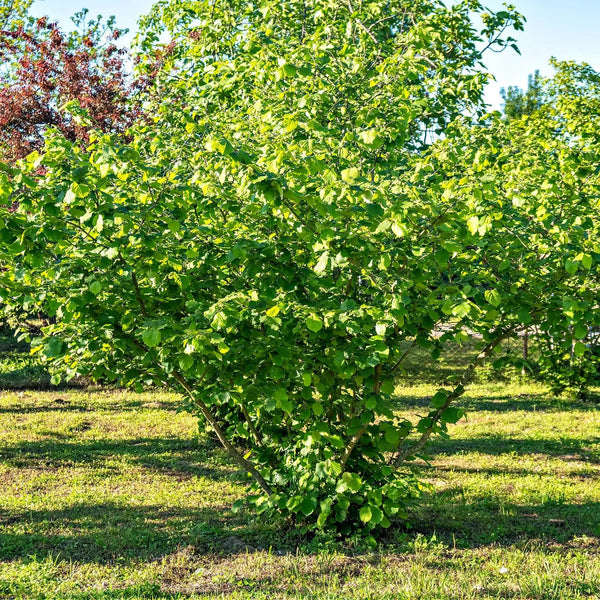
Our hornbeam tree is Carpinus caroliniana, the American hornbeam. Many people know it as musclewood, because its thin, bluish-gray bark stretches over fluted trunks that look like flexed muscle. That bark is a big reason to plant it. In winter, with the leaves gone, the smooth gray stems stand out in a bare yard. In spring, catkins open on the same tree. In fall, the oval, toothed leaves turn orange, red and burgundy, and small nutlets hang on green three-lobed bracts. It is a small tree, 20 to 30 feet tall and 20 to 35 feet wide, with a multi-stemmed, oval to spreading shape. That size suits side yards, courtyards and the north or east side of a building. A big shade tree would crowd those spots. It is not a fast tree, and it does not like drought, heat or packed soil. Below, we walk through planting it bare-root, spacing a row, and when the European hornbeam is the better pick.
Hornbeam tree and shade partners
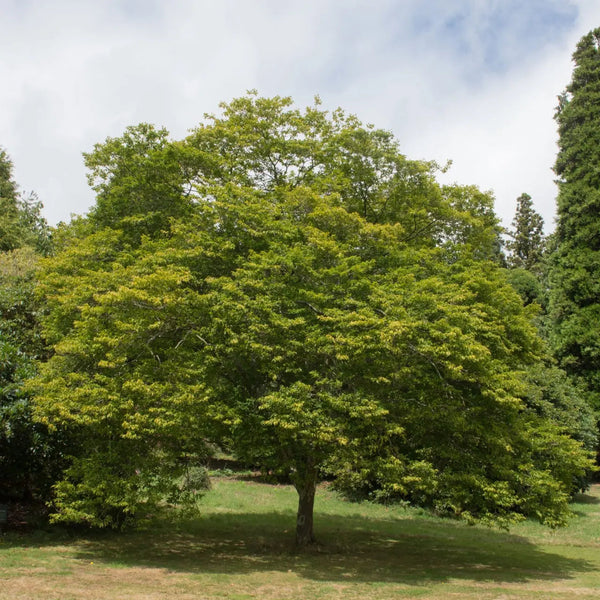
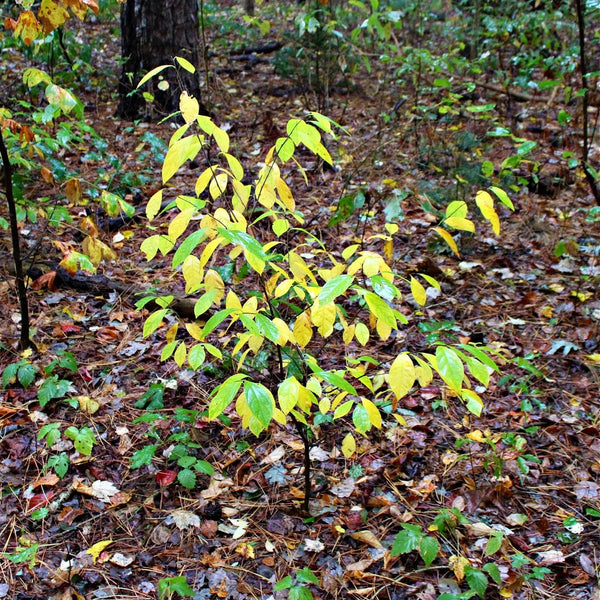
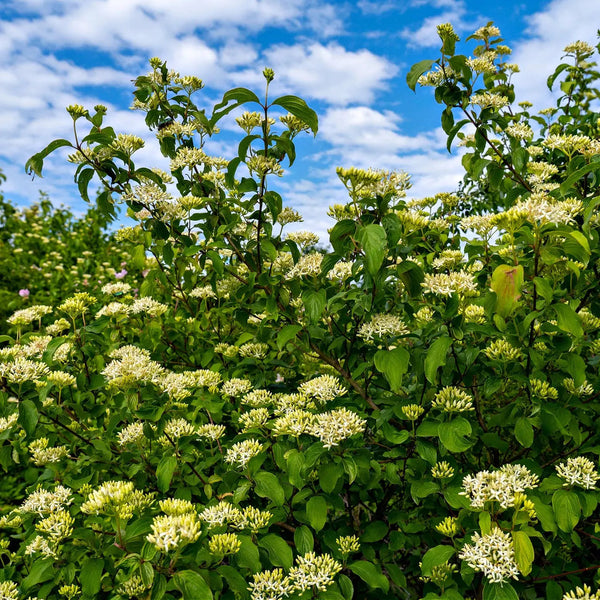
1. Pick a shady spot with moist soil
Hornbeam is an understory tree, so give it the shade taller trees leave behind. Good spots include woodland edges, ground under an existing canopy, and the north and east sides of buildings. It takes deep or partial shade, and some sun if the soil stays moist. Clay, loam and sand all work, best with plenty of organic matter, in acidic to neutral soil. It even forgives wet or briefly flooded ground.
Tip: Hornbeam is hardy in zones 3 to 9.
2. Soak the bare roots, then plant
Our hornbeams ship bare-root in November, so plant them while they are dormant. Soak the roots first so they go into the ground moist. Dig a hole in loose, organic soil, wide enough to spread the roots without bending them. Set the tree at the depth it grew at the nursery; look for the soil line on the stem. Firm the soil around the roots and water well.
Tip: On a slow grower, the 3-4 foot size gives you height sooner.
3. Space trees 15 to 20 feet for a screen
Hornbeam grows multi-stemmed, with an oval to spreading crown. Set a row 15 to 20 feet apart and you get a loose, natural screen, not a clipped wall. That spacing suits a property line, a shady fence or the back of a lot. For a single specimen, leave room for a spread of 20 to 35 feet. Taller trees nearby are fine, since hornbeam grows happily in their shade.
Tip: Fill the gaps with part-shade shrubs such as Northern Spice Bush or Black haw Viburnum.
4. Mulch and water for two summers
Hornbeam is sensitive to drought, heat and packed soil, so the first years matter most. Spread a thick ring of mulch over the root zone, keeping it off the trunk. Give a deep watering each week through dry spells in the first two summers. Go easy with the pruners. The tree builds its muscled look from its natural multi-stem shape, and it is happiest left to form it.
Tip: Keep mowers and foot traffic off the root zone so the soil stays loose.
American vs European hornbeam
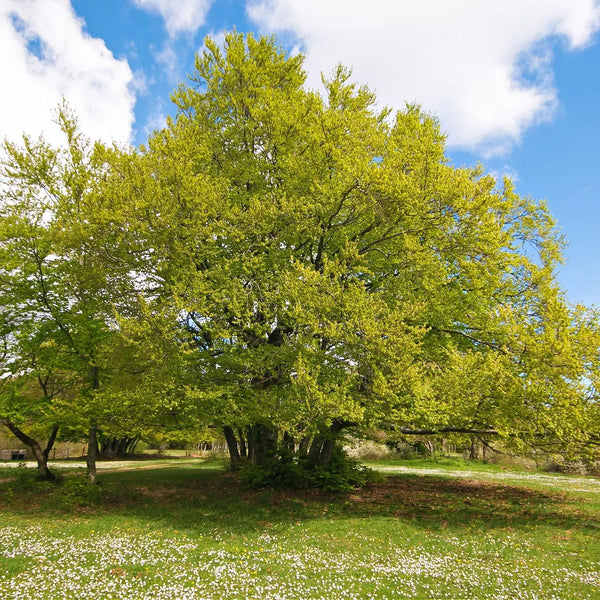
The hornbeam known for clipped hedges is usually the European hornbeam, Carpinus betulus. It is a larger tree, often 30 to 60 feet tall, with golden-yellow fall color, and it handles heavy pruning. Columnar forms are also sold for narrow sites. For more on the genus, see the hornbeam profile from Oklahoma State University Extension. Choose European hornbeam for a sheared formal hedge or a tall shade tree in sun. Choose American hornbeam, the one we grow, for shade, wet ground, wildlife and a smaller footprint. It is native, and its seeds and buds feed songbirds, grouse, quail, wild turkeys, foxes and squirrels. Its leaves feed eastern tiger swallowtail and red-spotted purple caterpillars, and deer tend to leave it alone. Want a native for the European's other jobs? Try American beech for big, long-term shade, or American hazelnut for a hedge set 4 to 6 feet apart.
Care and keeping
Most of a hornbeam's care comes in its first few years. Water deeply through droughts, keep the mulch ring topped up, and avoid packing the soil over its roots. Leaf spot, cankers and twig blight show up now and then. Prune only dead or broken wood, and let the tree keep its natural multi-stemmed form.
Frequently asked questions
Are hornbeams good trees?
Yes, for the right spot. American hornbeam is a small native tree, 20 to 30 feet tall, that grows in shade, handles wet ground and feeds birds and other wildlife. It has striking bark and orange-to-red fall color. The trade-offs are slow growth and a dislike of drought, heat and packed soil.
Is the American hornbeam tree messy?
Not very. It drops its leaves in fall like any deciduous tree, and its seeds hang in autumn as small nutlets on green, three-lobed bracts. There are no large fruits or pods to rake up. Under a bed or woodland edge, the fallen leaves simply become mulch.
How long do hornbeam trees take to grow?
Hornbeam grows slowly, so it won't give quick shade. It tops out at 20 to 30 feet, which takes many years to reach. For a head start, plant our 3-4 foot bare-root trees rather than the smaller sizes. Keep them mulched and watered so growth doesn't stall in dry summers.