
The short answer
When to prune wisteria: twice a year. In summer, about two months after the flowers fade, cut long green runners to five or six leaves. In winter, while the vine is bare, cut those shoots to two or three buds. Cooler zones prune later; warmer zones, earlier.
A wisteria that is never pruned puts out long, leafy runners and very few flowers. Good timing fixes that, and the reason lies in how the vine flowers. The blooms form on short, stubby side shoots called spurs, which grow off the main woody framework. Each spur holds fat flower buds over winter. Cut at the wrong time, and you remove those buds before they open in spring. Cut at the right time, and the vine stays tidy, lets sun reach the wood and sets more buds each year. The summer cut controls the runners, so energy goes to the spurs instead of leaves. The winter cut shortens the spurs, so each one carries a few strong buds close to the framework. Together they keep a big vine in bounds on a pergola, arbor or porch. The steps below also cover training a young vine, rescuing an old one and moving the dates for your zone.
Vines that need regular pruning
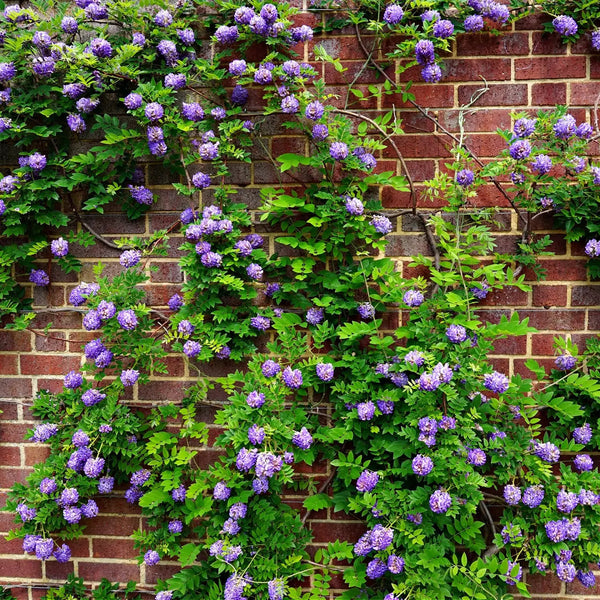


1. Summer cut: runners back to five or six leaves
Wait until the flowers are done and the new growth has hardened, usually about two months after bloom. Find the long, whippy green shoots growing out from the main framework. Cut each one back to five or six leaves from where it starts, roughly 6 to 12 inches. Keep any shoot you need to extend the framework and tie it in instead. The UC Marin Master Gardeners describe the same two-cut method.
Tip: Shorten new runners again every few weeks through late summer.
2. Winter cut: spurs back to two or three buds
Prune again when the leaves have dropped and the vine is fully dormant, before the buds begin to swell. With the leaves gone, the framework is easy to see. Take each shoot you shortened in summer and cut it back to two or three buds, about 1 to 2 inches from the main stem. Remove dead, damaged or crossing wood at the same time.
Tip: Flower buds are plump and round. Leaf buds are slim and flat. Keep the plump ones.
3. Training a young wisteria
For the first few years, build the framework before you chase flowers. Choose one strong stem as the main trunk and tie it to a sturdy support, such as a pergola, arbor or heavy post. Pick a few side shoots to become the main arms and space them along wires or beams. Rub off suckers at the base as they appear. Each winter, shorten the leader to encourage new arms.
Tip: Keep young stems off gutters, siding and nearby trees. The stems tighten as they age.
4. Rescuing a wisteria that is out of control
Do not try to fix an overgrown vine in one go. Spread the work over three winters. In the first, cut out dead wood and runners that have climbed into gutters, trees or roofs. In the second, remove one or two of the oldest main stems at the base. In the third, rebuild the spurs with the normal winter cut, and summer-prune every year.
Tip: Expect fewer flowers for a season or two while the vine recovers.
5. Pruning mistakes that stop blooms
Most missed blooms trace back to a few habits. Shearing the whole vine in fall or early spring cuts off the buds already set for spring. Skipping the summer cut lets runners shade the spurs. Heavy feeding with lawn fertilizer, which is rich in nitrogen, pushes leaves instead of flowers. And cutting a vine to the ground starts the flowering clock again.
Tip: Wisteria can take a few years after planting to bloom, so give a young vine time.
Shifting the dates by US zone
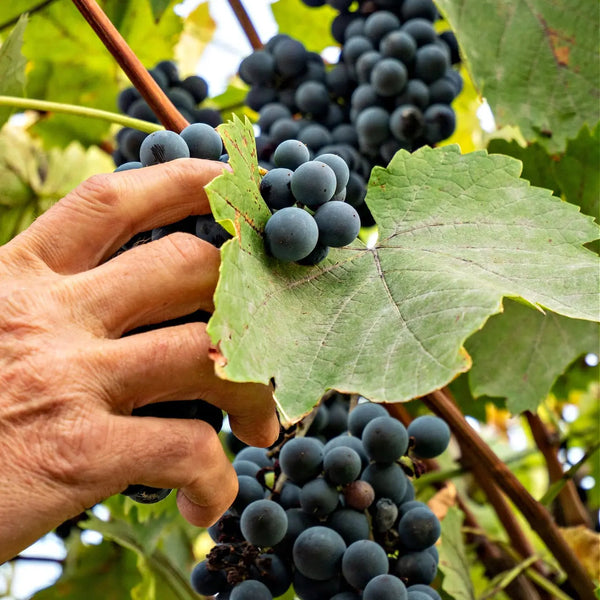
A wisteria in Georgia and one in Michigan can be weeks apart. The safest rule is to follow the vine, not the calendar. Time the summer cut from when your flowers fade, then wait for the new shoots to firm up. Time the winter cut from when the leaves drop and before the buds swell. In cooler zones 5 and 6, bloom comes later, so the summer cut usually falls in July or August and the winter cut in late February or March. In zones 7 and 8, both cuts tend to come a few weeks earlier. In zone 9, where winters are short, prune soon after the leaves fall, often in January. Our wisteria grows in zones 5 to 9 and blooms best in full sun. Grapes follow a similar winter rhythm: Concord vines are cut hard in late winter, when the wood is bare, so both vines can share one pruning day.
Care and keeping
After a winter cut, spread a layer of mulch over the roots and water during dry spells in spring. Use clean, sharp pruners for every cut. Skip heavy lawn fertilizer, which feeds leaves rather than flowers. Check your state's invasive plant list before planting, since some states list Chinese and Japanese wisteria as invasive.
Frequently asked questions
Do you cut wisteria back to the ground?
Only as a last resort. Wisteria usually regrows from the roots after a hard cut, but you lose the woody framework and the flower spurs on it. It may take several years to bloom again. For an overgrown vine, a staged cut over three winters keeps some flowers coming while you regain control.
Can I prune wisteria in September?
A light trim of stray runners in early September is fine in most zones, especially if they are reaching gutters or windows. Avoid any hard cut then. The spurs are already setting next spring's buds, and fresh growth pushed late in the season can be hurt by early frost. Save major work for winter.
How long does it take for wisteria to bloom?
Wisteria can take a few years after planting to start blooming, so patience pays. Plants grown from seed often take far longer than nursery stock. Full sun, a sturdy support and the twice-a-year pruning plan all help a young vine reach flowering sooner and bloom more heavily once it starts.
Wisteria pruning calendar by US zone
| Zone | Usual bloom | Summer cut | Winter cut |
|---|---|---|---|
| Zones 5 and 6 | Late spring | July to August | Late February to March |
| Zones 7 and 8 | Mid spring | June to July | January to February |
| Zone 9 | Early spring | May to June | January |
Usual bloom
- Zones 5 and 6
- Late spring
- Zones 7 and 8
- Mid spring
- Zone 9
- Early spring
Summer cut
- Zones 5 and 6
- July to August
- Zones 7 and 8
- June to July
- Zone 9
- May to June
Winter cut
- Zones 5 and 6
- Late February to March
- Zones 7 and 8
- January to February
- Zone 9
- January