
The short answer
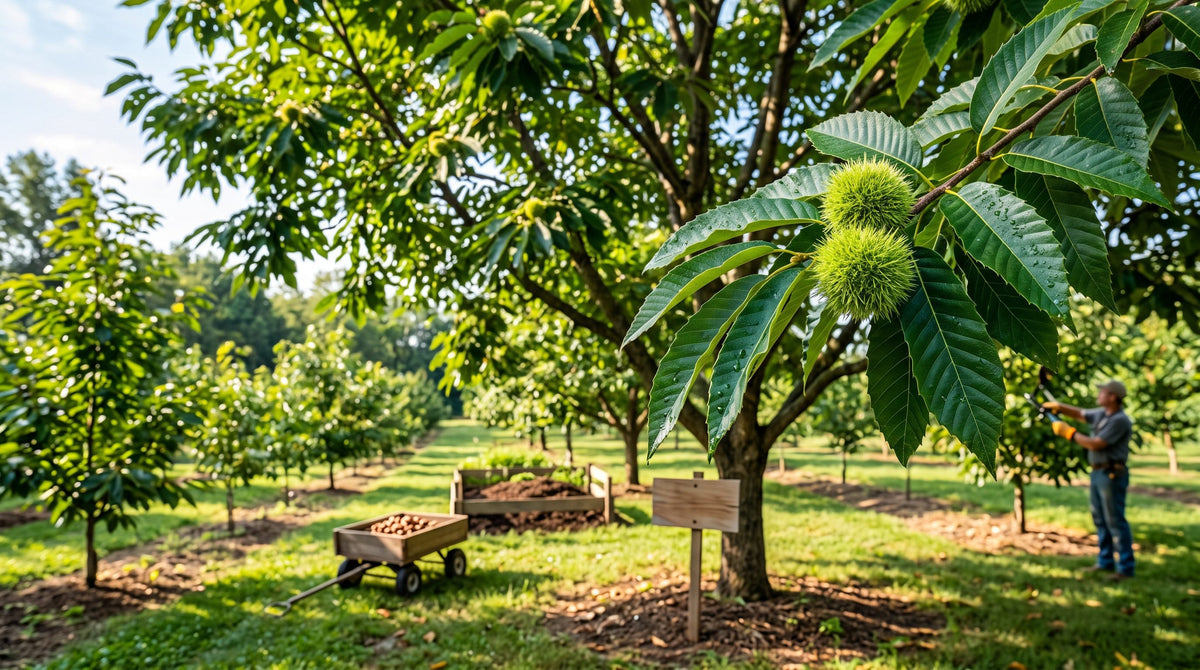
Chinese chestnut vs American chestnut comes down to blight: Chinese chestnut resists it, American chestnut has almost none. For a nut crop, deer or turkey, plant Chinese chestnut: it bears in about 3 to 5 years and reaches 40 to 60 feet. The two also differ in leaves, twigs, nut size and tree height, compared below.
American chestnut once grew across the Appalachian Mountains, with trees topping 100 feet. Then chestnut blight, a fungus disease introduced in the late 1800s and early 1900s, killed billions of them. American chestnut has almost no defense against it. Chinese chestnut evolved alongside the same fungus, so it carries natural resistance. That is why it is the chestnut most growers in the United States rely on for steady nut crops. Breeders have crossed the two species, aiming for trees that look mostly American but keep the Chinese resistance. If you are choosing for a nut orchard, a food plot or a homestead, the real question is simple. Which tree will still be standing, and bearing, in ten years? For most planters, that answer is Chinese chestnut. It bears sweet nuts within a few years, feeds deer, turkey, squirrels and bear each fall, and handles clay, sand or thin soil once it is established.
Chinese chestnut vs American chestnut
1. Check blight resistance first
Start with the disease, because it decides whether a tree lives. Chinese chestnut shows greater resistance to chestnut blight than American chestnut, according to the LSU AgCenter. A pure American chestnut seldom lives long enough to bear reliably. For a crop you can count on, choose Chinese chestnut. Leave American chestnut to restoration groups and breeding programs working on resistant hybrids.
Tip: Check the label for Castanea mollissima, the botanical name of Chinese chestnut.
2. Tell the leaves and twigs apart
Turn a leaf over. Chinese chestnut leaves are thick, glossy on top and hairy underneath. American chestnut leaves are thin and papery, smooth underneath, with large, hooked teeth along the edge. Twigs help too: Chinese chestnut twigs carry dense, fine hairs, while American chestnut stems are smooth and reddish brown. Both trees hold two to three nuts in each spiny bur, so burs alone will not settle it.
Tip: Hybrids can mix these traits, so check several leaves before deciding.
3. Compare nuts, taste and tree size
Chinese chestnuts are the bigger, rounder nuts of the two. They are brown, crisp and sweet, from 1 to 3 inches long, and low in tannin, the bitter compound found in acorns. American chestnuts are smaller. The trees differ even more. American chestnut once topped 100 feet in the forest. Chinese chestnut grows 40 to 60 feet tall with a broad, spreading crown, more like an orchard tree.
Tip: Nuts ripen from mid-September into October, so plan your harvest or hunting season around it.
4. Match the site and spacing
Chinese chestnut is hardy in USDA zones 4 to 8. Give it full sun and moist, well-drained soil that is neutral to slightly acidic. It tolerates clay, sand or thin soil, and handles a dry spell once established. Avoid low spots where water sits. Space trees at least 30 feet apart. In orchard rows, 30 by 30 feet holds about 48 trees per acre, and 40 by 40 feet about 27.
Tip: Keep trees away from walkways and patios: burs are prickly and the flowers smell strong.
5. Plant at least two for pollination
Chestnuts set their best crops when pollen moves between different trees. A single tree will grow, but two or more give a heavier crop. Plant at least two within about 100 feet of each other. Seedlings make this easy, because each one is genetically unique. For deer and turkey, a group of 20 to 30 trees along a food plot edge gives a steady drop into early hunting season. Plant while trees are dormant; ours ship bare-root from November.
Tip: A seedling bundle of 100 builds cross-pollination into an orchard from day one.
Trees or seedlings for your planting
Both of our Chinese chestnut listings are the same species, Castanea mollissima, shipped bare-root and dormant. The difference is size and scale. The Chinese Chestnut Tree comes in 1-2, 2-3 and 3-4 foot sizes, in packs of 25, 50, 100 and 500. It suits orchards, homesteads and wildlife plots where you want bigger stock. The 1-2 foot trees are the easiest to plant at scale. Orchard buyers usually start with 50 or 100 trees so pollination is built in. Chinese Chestnut Seedlings come in 6-12 inch, 12-18 inch and mixed 6-24 inch row run grades, in bundles of 100, 500 and 1,000. They fit large food plots, agroforestry rows and nurseries growing on young stock or rootstock for grafted cultivars. Seedlings commonly start bearing in 3 to 5 years. For a second early food source for wildlife, sawtooth oak seedlings drop acorns in early autumn and often bear within 5 to 8 years.
Care and keeping
Soak bare roots for a couple of hours before planting. Dig a hole wider than the roots and set the tree at the depth it grew. Water deeply every week through the first summer and mulch to hold moisture. In fall, pick up nuts daily as they drop, and wear gloves for the spiny burs.
Frequently asked questions
Do Chinese chestnuts taste like American chestnuts?
Not quite. Chinese chestnuts are the larger, rounder nuts, crisp and sweet and low in tannin. American chestnuts are smaller, and few people get to taste them now, because so few trees survive blight long enough to bear a crop. If you want chestnuts to roast or boil at home, Chinese chestnut is the one you can grow.
Can you eat chestnuts from a Chinese chestnut tree?
Yes. Chinese chestnuts are grown across the United States as a nut crop for roasting, flour and fresh sales. Cut a slit across the flat side and roast them in the shell, or boil them and peel. Gather them quickly as they fall, since deer, turkey, squirrels and bear eat them too.
Which type of chestnut is best for eating?
For a home or farm crop in the eastern United States, Chinese chestnut is the practical pick. It resists blight, starts bearing in about 3 to 5 years and gives heavy yearly crops of sweet nuts. American chestnut seldom survives blight long enough to bear, so it is not a realistic choice for a nut crop today.
Chestnut traits side by side
| Trait | Chinese chestnut | American chestnut |
|---|---|---|
| Botanical name | Castanea mollissima | Castanea dentata |
| Blight resistance | Natural resistance | Almost none |
| Leaf feel | Thick, glossy | Thin, papery |
| Leaf underside | Hairy | Smooth |
| Leaf teeth | Smaller | Large, hooked |
| Twigs | Densely hairy | Smooth, reddish brown |
| Nuts per bur | Two to three | Two to three |
| Nut size | Larger, rounder | Smaller |
| Tree height | 40 to 60 feet | Once over 100 feet |
| Years to first nuts | About 3 to 5 | Seldom bears before blight |
| Pollination | Plant two or more | Plant two or more |
| Best use today | Nuts, deer, orchards | Restoration and breeding |
Chinese chestnut
- Botanical name
- Castanea mollissima
- Blight resistance
- Natural resistance
- Leaf feel
- Thick, glossy
- Leaf underside
- Hairy
- Leaf teeth
- Smaller
- Twigs
- Densely hairy
- Nuts per bur
- Two to three
- Nut size
- Larger, rounder
- Tree height
- 40 to 60 feet
- Years to first nuts
- About 3 to 5
- Pollination
- Plant two or more
- Best use today
- Nuts, deer, orchards
American chestnut
- Botanical name
- Castanea dentata
- Blight resistance
- Almost none
- Leaf feel
- Thin, papery
- Leaf underside
- Smooth
- Leaf teeth
- Large, hooked
- Twigs
- Smooth, reddish brown
- Nuts per bur
- Two to three
- Nut size
- Smaller
- Tree height
- Once over 100 feet
- Years to first nuts
- Seldom bears before blight
- Pollination
- Plant two or more
- Best use today
- Restoration and breeding