



Quick Facts
Exposure: Full Sun
Height at Maturity: 3-5 Feet
Usage: Flower Gardens
Shipped As: Bare-root
Planting Zones:
Product Details
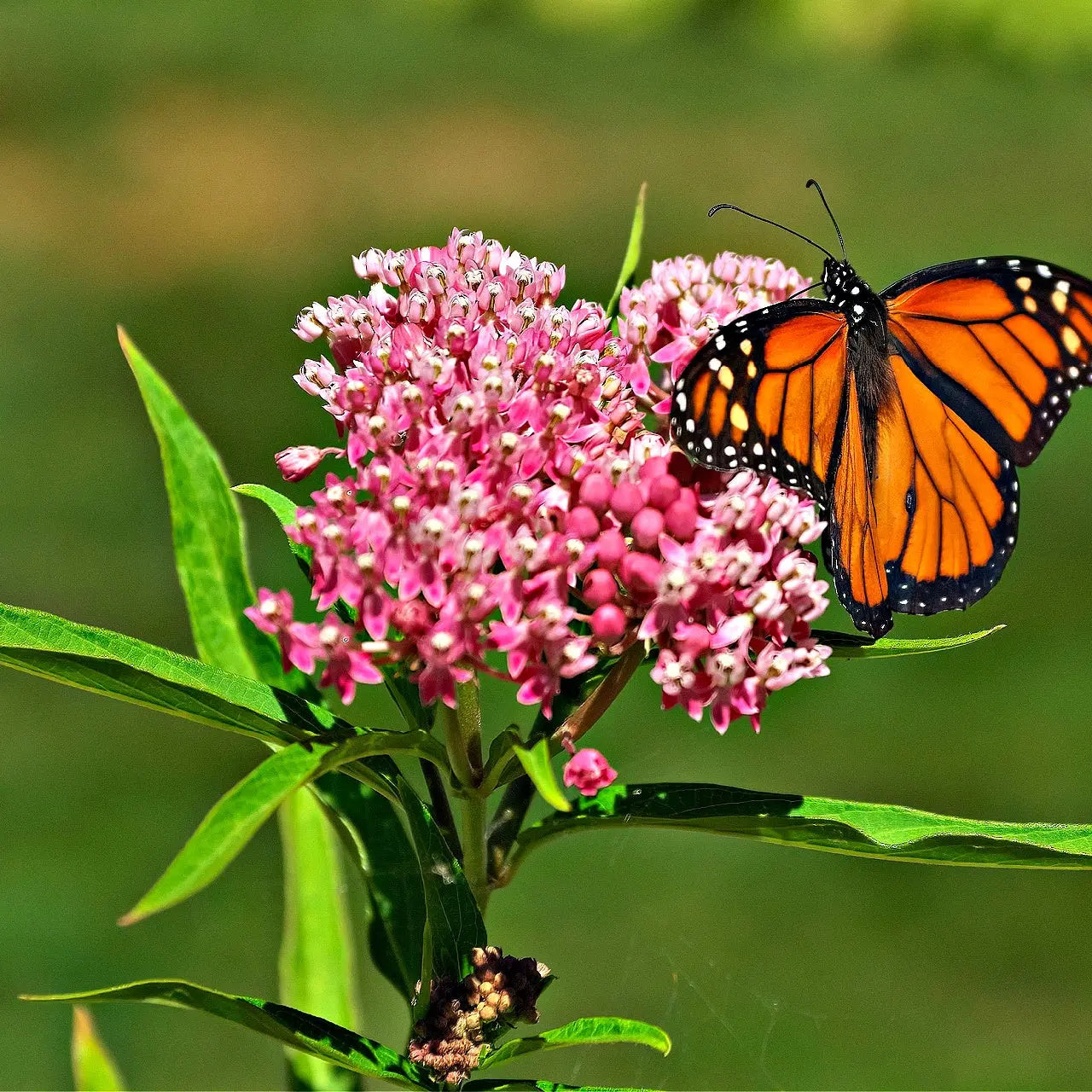
Common milkweed (Asclepias syriaca) is one of three milkweeds the eastern monarch migration leans on most. Researchers who tested monarchs wintering in Mexico found that 85 to 92 percent had eaten it as caterpillars. We ship bare-root milkweed plants in packs of 25, 50, 100 and 500, for monarch plantings, pollinator strips and meadows.
Milkweed Height, Zones and Light
Most plants stand 3 to 5 feet, and ones growing in wet ditches can reach 8. Plant it in full sun, in zones 3-9. Moist, well-drained ground is ideal, but dry spells and clay do not stop it.
What the Flowers Look Like
Blooms are pinkish to purple, with the occasional white one, packed into round clusters. Each flower is about 1 centimeter wide, with five hoods and five pollinia, and the scent is strong. Nectar draws honey bees, but bumblebees do the better pollination work, because the plant mostly cannot fertilize itself. Over 450 insect species use it, from red milkweed beetles to milkweed bugs. Our posts on milkweed and monarch butterflies and wildflowers that attract monarchs cover what to plant beside it.
Pods, Silk and Sap
Fall brings large seed pods. Inside, each seed carries a tuft of long white silk that lets the wind carry it off. Break a stem and white latex runs out.
Good to Know About Milkweed
Roots send up new stems, so one plant becomes a patch over time. A bed of its own, or the edge of a meadow, gives it room. Mature leaves and stems are toxic to people and livestock because of cardiac glycosides.
Milkweed Packs and Shipping
Milkweed ships bare-root now, in packs of 25, 50, 100 and 500. Volume pricing available. Browse more perennials for sale.